
TDLR-LICENSED · ACO1245
Independent mold inspection in Spring from a TDLR-licensed assessor. A $550 flat fee, lab results in one business day, and no remediation to sell, so your report tells you the truth about your home.
Mold Risk in Spring
A mold inspection in Spring, TX usually starts with the creeks. Cypress Creek and Spring Creek have flooded the same neighborhoods more than once, and a home that has taken water twice has had two chances to hold moisture inside a wall.
More than 8,700 homes flooded along Cypress Creek during Harvey, and another 1,700 during the 2016 Tax Day flood. Neighborhoods like Ponderosa Forest and Wimbledon Champions took water in both.
That is what the Cypress Creek watershed recorded during Harvey. Walls dried in place instead of opened up are where hidden growth tends to start, and plenty of Spring homes were dried in place.
Much of Spring went up in the 1970s and 1980s around the Klein schools, so original supply lines, aging roofs, and tired tub surrounds are all reaching the age where they leak slowly rather than dramatically.
Harris County bought out 81 homes in Ponderosa Forest and 23 in Westador rather than watch them flood again. Most neighbors repaired instead, and a repaired house is not automatically a dry one.
How It Works
Every inspection follows the same four steps, whether it’s a pre-purchase check in Champion Forest or a post-leak inspection off Cypresswood.
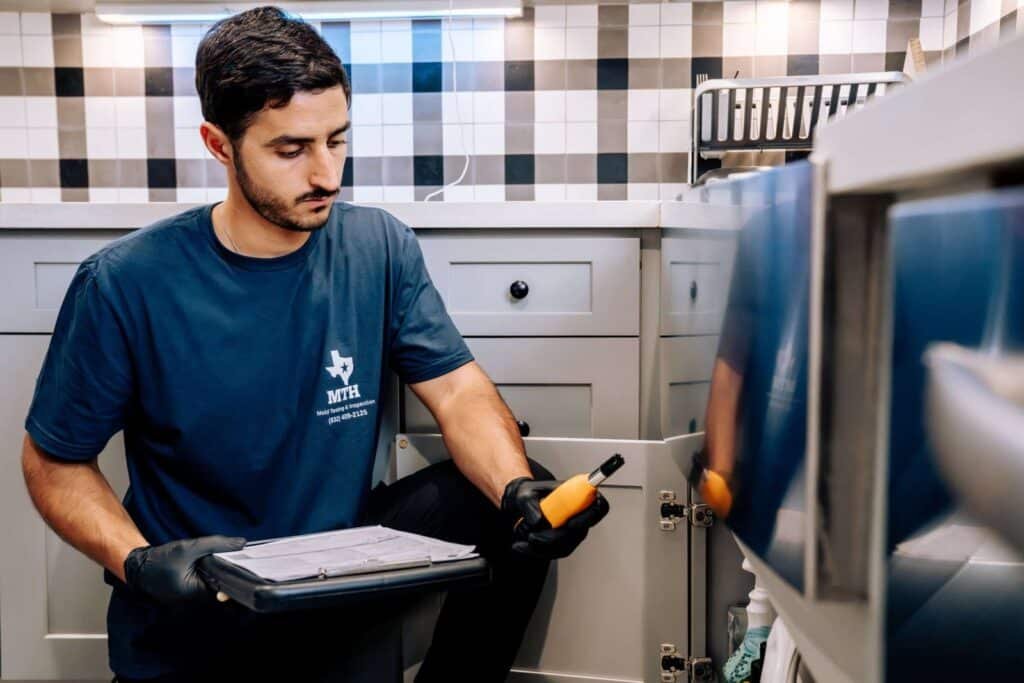
Find visible mold and its source
We check every room, the attic, HVAC closets, and behind appliances for growth, stains, and signs of past leaks. That walkthrough decides where we sample and what gets flagged in your report.

The data behind hidden mold problems
Using moisture meters, thermal imaging, a hygrometer, and a borescope, we measure humidity, surface moisture, and dew point inside wall cavities. Elevated readings pinpoint moisture intrusion that feeds mold growth out of sight.
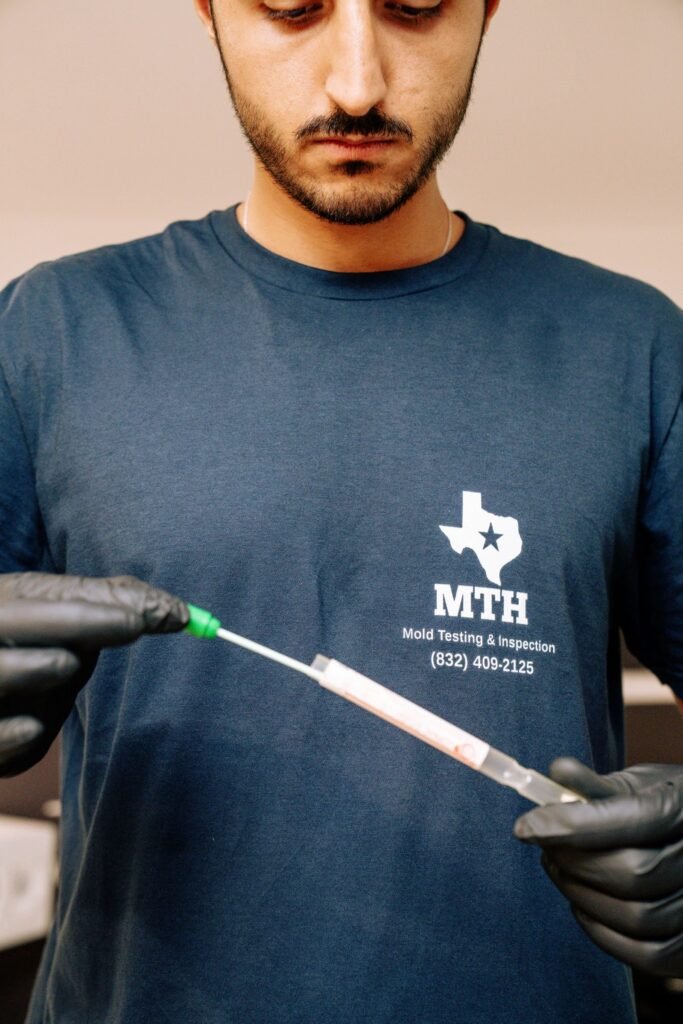
EMSL Analytical lab results you can trust
We collect air (spore-trap) samples to measure airborne spore counts, plus surface, swab, or tape-lift samples on visible growth, each compared against an outdoor control. Every sample is analyzed by EMSL Analytical, an independent AIHA-LAP accredited laboratory, for species identification and concentration. See our air quality testing process for how the sampling works.

Clear results in one business day
You receive a plain-language mold inspection report within one business day, detailing findings, spore counts, and recommended next steps. Detailed enough to hand to a buyer, lender, landlord, or remediation contractor so you can act on it immediately. If cleanup is required, we write the mold remediation protocol your contractor works from. Every inspection is backed by TDLR license ACO1245.
Our Pricing
The price you see is the price you pay. No credit card required to book, and payment is collected at the inspection.
No credit card required to book. Payment is collected after the inspection is completed and prior to delivery of the final report.
Before You Book
The practical answers Spring homeowners and agents ask before scheduling.
Larger homes, or homes with a history of water damage, can take longer. Same-day appointments are often available across Spring and Klein.
The inspection is the walk-through and moisture mapping. The test is the samples we send to the lab. Your $550 visit covers both, with up to two samples.
Photos, moisture readings, and EMSL lab results within one business day, formatted for negotiations, insurance claims, or remediation planning.
Once contamination passes 25 contiguous square feet, Texas requires the licensed assessor and the licensed remediator to be separate parties. We only assess.
When to Book
You don’t need visible mold to need an inspection. These are the most common reasons to book.
Roof, plumbing, slab, or an AC drain line, even one that seemed to dry out fine. Moisture inside walls dries on its own schedule.
Odor without visible growth usually points behind drywall, under flooring, or into the HVAC system.
Lab-backed answers before the option period closes, especially on a street that took water in 2016 or 2017.
A few inches of water against a slab or under a door can wick into wall cavities and bottom plates.
Before new drywall and insulation go back in, that open wall is the last easy chance to confirm what is behind it.
Clearance testing confirms the cleanup worked before walls are closed or the home is listed. See clearance testing
Why Spring Chooses Us
Four things worth checking before you hand over a deposit, on any inspector, including us.
One flat fee for a standard inspection, published right here. Extra samples are $85 each, and only with your approval.
Inspections run under Mold Assessment Consultant Ran Bozaglo (MAC1839) and company license ACO1245. Verify both with TDLR before you book.
Samples go to EMSL Analytical, AIHA-LAP accredited. Species and spore counts come from the lab, not from us.
We never bid on remediation, so a clean result is as good for us as a failing one.
Proof, Not Promises
Rated 5.0 on Google by Houston-area homeowners.
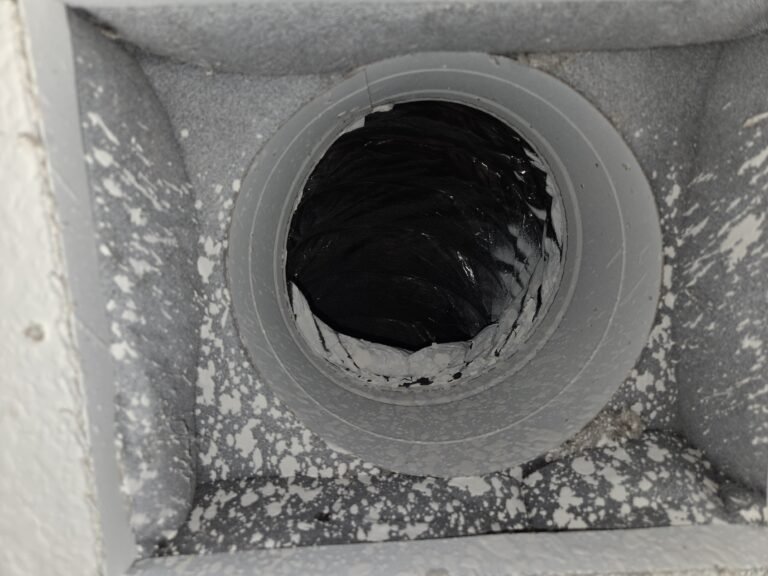
The homeowner had just had the HVAC system cleaned and wanted it checked afterward.
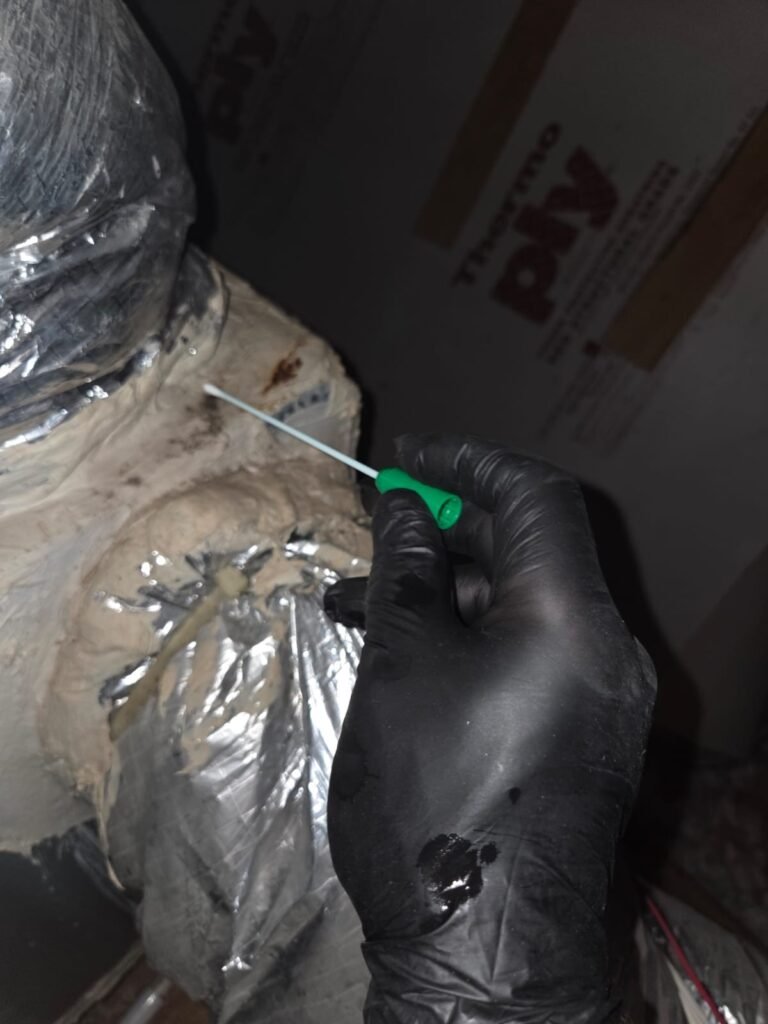
The homeowner requested a full mold inspection and testing of the house.
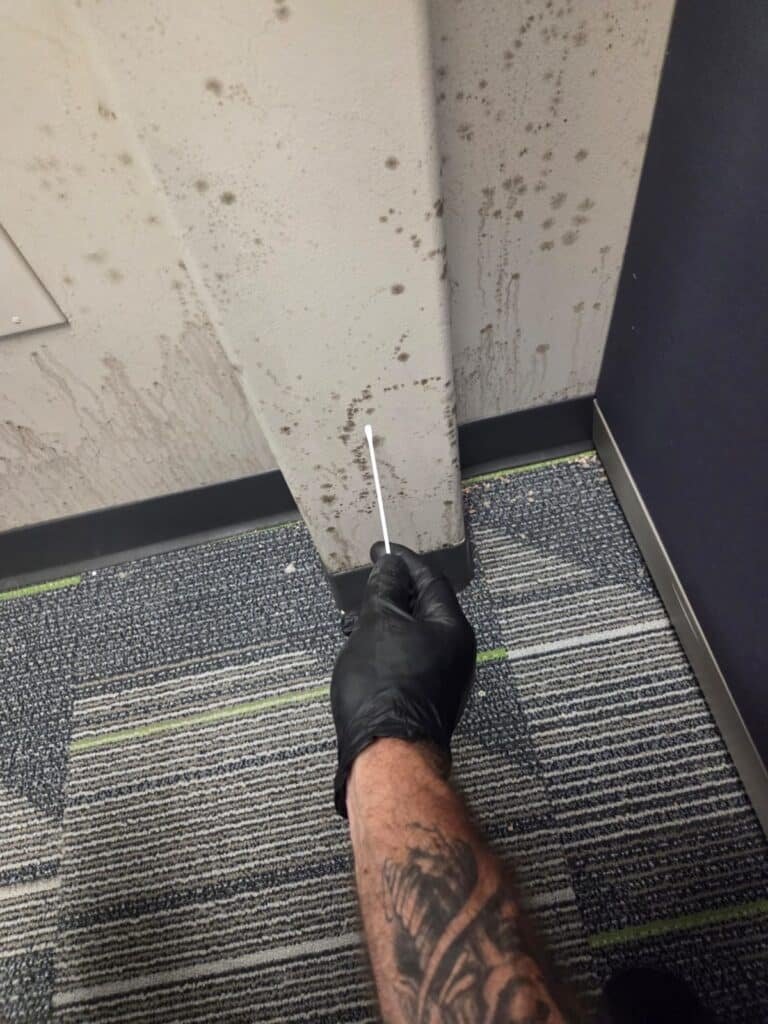
The office manager requested a full mold inspection and testing after noticing visible signs of growth on an exterior wall.
Buying or Selling in Spring?
Lab results before your option period closes.
A Texas option period moves fast, and in Spring the flood question comes up early: which watershed, what happened in 2016 and 2017, has this street taken water twice. Texas sellers have to disclose known defects, including past mold damage. Our report returns EMSL lab results within one business day of sampling, so buyers negotiate with facts, sellers clear doubts before listing, and agents keep the timeline intact. Because we are assessment-only, neither side can accuse the report of padding a repair bill.
The Independence Rule
Texas requires the licensed mold assessor and the licensed remediator to be different parties. We chose the assessment side on purpose, so we can explain why two remediation bids can differ by thousands without competing for either one. Here’s how it plays out, start to finish.
Texas Occupations Code Chapter 1958 bars the same licensed party from assessing and remediating mold on the same project once contamination passes 25 contiguous square feet. The rule is enforced by the Texas Department of Licensing and Regulation.
You get a written report with photos, lab results, moisture readings, and a clear scope of work. Take it to any licensed Texas remediation contractor for competitive bids. No markup, no referral fees, no preferred-vendor arrangement on our end.
Verify their TDLR Mold Remediation Contractor license, confirm insurance that covers mold work, and compare bids against the same written protocol. Plenty of Spring companies sell inspection and remediation together, which is exactly what the law separates on larger jobs.
After remediation, we return for independent clearance testing in your Spring home: re-inspection and re-sampling that confirm the work met the protocol.
Our Services
Three core services, one independent assessor. Every service is performed by a TDLR-licensed mold assessor with full lab reporting in one business day.
Air quality and surface sampling to determine whether mold is present in your home or business. Includes a TDLR-licensed assessor on-site, EMSL lab analysis, and a detailed report delivered in one business day.
$550 flat feeSee all services →A detailed, step-by-step plan that licensed remediators follow to remove mold safely. Required by Texas law when remediation involves more than 25 contiguous square feet. We write the plan, the remediator follows it.
Starting at $750See the $750 protocol →Post-remediation verification testing to confirm that mold has been properly removed. Required after professional remediation work, and recommended any time you want third-party verification that your space is safe.
See clearance testing →Frequently Asked
Quick answers to the most common questions from Spring homeowners and agents.
Areas We Serve
Same TDLR-licensed inspection, same $550 flat fee, results in one business day, across Spring and the surrounding north Harris County communities.
For nearby coverage, see our pages on mold inspection across The Woodlands, Tomball, and Conroe, or browse all of our Houston service areas.
Independent mold inspection from a TDLR-licensed Texas team. Same-day appointments often available. Transparent pricing, no surprises.