
TDLR-LICENSED MOLD ASSESSMENT COMPANY - ACO1245
Your remediation contractor says he can’t start until you get a protocol. That’s not a runaround, that’s the law working for you: Texas requires the plan to come from an independent licensed assessor with no stake in the cleanup bid. We write the plan. We never touch the cleanup. Starting at $750, written by a licensed Mold Assessment Consultant, in your hands within one business day of your lab results.
UPFRONT PRICING
The mold inspection and protocol come together in one flat fee; you don’t book them separately. One visit, one lab run, one finished document, one number. Because we’re not connected to the cleanup, a bigger mold problem doesn’t mean a bigger bill from us.
The step-by-step plan a licensed remediator follows to remove confirmed mold
+ Additional samples $85 each, added only with your approval
Book ProtocolYours to hand to the licensed remediation contractor of your choice
The follow-up that proves the job actually worked, and unlocks your Certificate of Mold Damage Remediation
Once your contractor finishes the work in your protocol, Texas requires one more step: an independent re-test to prove the mold is actually gone. We come back, sample the air again, and measure the results against the standard your protocol set on day one. Pass, and the plastic comes down, the certificate gets signed, and your file is complete.
post-remediation clearance testingNo credit card required to book. Payment collected at the inspection.
Houston contractors usually just call it a mold protocol: the written, room-by-room plan that tells a licensed remediation contractor exactly how to get the mold out of your property. Which materials come out, which get cleaned, how the work area gets sealed off, what the crew wears, and the exact standard the finished job has to pass.
Under the Texas Mold Assessment and Remediation Rules (TMARR), only a TDLR-licensed Mold Assessment Consultant can write one, and the law requires it any time contamination covers 25 contiguous square feet or more. Your contractor isn’t inventing paperwork. They legally cannot start without it.
Simplest way to think about it: the mold inspection diagnoses the problem, the protocol is the prescription, and clearance testing is the follow-up visit that confirms you’re actually better.
Most people who need mold remediation in Houston find out about this rule the hard way: whoever you hire for the cleanup, Texas law says the job starts with a document written by someone independent of them. That’s the part we handle.
Texas drew a hard line here, and for good reason: the person deciding how big the job is shouldn’t be the person getting paid by the job. The remediation contractor removes the mold. An independent licensed consultant writes the plan. Two different companies, by law, every time.
Independent Assessment Company
What You'll Find Elsewhere
Most of the protocol pages you'll find in a Houston search are published by remediation companies. Read them closely and you'll notice something: they can't actually write the document. The law says the protocol has to come from an independent consultant, so the free inspection is really a sales visit for the cleanup contract, and the protocol gets handled later, by someone like us, anyway. You might as well start where the document actually comes from.
Texas runs mold remediation on paperwork, and once you see why, you’ll be glad it does. Done right, you end up holding a file that proves the whole story. Here’s what lands in it, in order.
The inspection and lab results that confirm what you have and where it is. Everything else builds on this.
Written by our licensed consultant. The room-by-room plan your contractor is legally required to follow. Ready in one business day.
Prepared by the licensed remediator you choose, built from our protocol, and handed to you before prep work begins.
Our re-inspection and re-sampling that proves the finished work actually meets the standard the protocol set.
The signature page of the whole file: proof for you, your insurer, and any future buyer that the mold was professionally removed and independently verified. Texas ties it to the property for five years, which is exactly why you want one.
Most people have never seen a sample mold remediation protocol before they’re told to go buy one. This is what yours covers, section by section.
Your contractor builds their legally required work plan straight from this document. The more precise it is, the fewer surprises, change orders, and “well, that’s extra” conversations you have mid-project.
And because the clearance standard is defined up front, in writing, before the first sheet of plastic goes up, you, the contractor, and us are all measuring the finished job against the same yardstick. The finish line gets drawn before the race starts, and it doesn’t move.
If a contractor cuts corners, the protocol is also your receipt: what was specified, what was actually done, and what failed clearance.
HOW WE WRITE YOURS
Every protocol follows the same four steps, so you always know exactly where your job stands.

Map the problem and its source
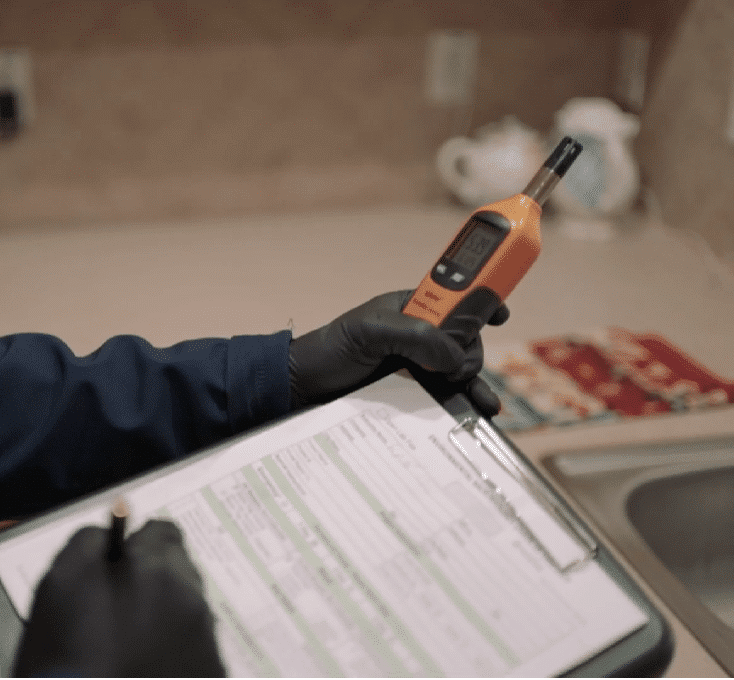
A full walk-through with moisture meters, humidity readings, and thermal imaging to map the contamination and find the water that’s feeding it.

Measure what is actually in your air
Air and surface samples go to EMSL Analytical, an AIHA-LAP accredited lab, for species and concentration. We don’t grade our own homework.
The plan, written to code
Ran Bozaglo (MAC1839) writes your room-by-room protocol to TMARR and IICRC S520 standards. Your property, not a template.

Ready for your remediator
The finished protocol hits your inbox within one business day of your lab results, ready to hand to whichever remediator you choose.

Every protocol we deliver is written by Ran, not routed to a subcontractor or stamped out of a template. He founded Mold Testing Houston in 2017 and has assessed more than 3,000 homes and businesses, every one of them assessment-only.
Texas requires sellers to give buyers every mold remediation certificate from the past five years. A documented protocol trail turns that disclosure into proof the problem was fixed, instead of a red flag.
BEFORE YOU BOOK
Straight answers, even when the answer is that you don’t need us.
It starts at $750 with Mold Testing Houston, covering the full inspection, lab-analyzed samples, and the written remediation plan and work analysis for one area. Additional samples are $85 each and only collected with your approval. The price is on this page because you shouldn't have to call to learn it.
Only a licensed Mold Assessment Consultant (MAC). Yours is written by Ran Bozaglo, MAC1839, under our assessment company license ACO1245. The contractor doing the cleanup is legally barred from writing the protocol for that same job.
Whenever mold contamination covers 25 contiguous square feet or more, TDLR rules require a written protocol from a licensed MAC before a licensed remediation contractor can start. Under that threshold it's optional, but it's still the cleanest way to define the scope and what "passing" means, in writing.
It's delivered within one business day of your lab results. A Friday inspection means the lab report and protocol land Monday. Same-day inspection appointments are often available across Greater Houston.
The licensed Mold Remediation Contractor you hire. They have to prepare a work plan that fulfills the protocol, give it to you at least one calendar day before prep work begins, and keep both documents on-site for the whole project.
Deviations have to be documented, and unapproved ones put the contractor out of compliance with TDLR. Practically, it also catches up with them at the end: clearance testing measures the finished work against the protocol, and corner-cutting doesn't pass.
No. Texas Occupations Code Chapter 1958 requires the assessor and the remediator on a regulated project to be independent companies. If a company offers to inspect, write the protocol, and do the removal as one tidy package, one of those services isn't going to be legal, and it's worth asking which.
On regulated projects, yes. An independent assessor has to verify the work against the protocol's clearance criteria before containment comes down, and that's what allows the Certificate of Mold Damage Remediation to be signed. We handle mold clearance testing in Houston as a separate visit after your contractor finishes.
Sometimes, legally, yes. Texas allows homeowners to handle their own remediation in certain circumstances under the exemptions in Occupations Code 1958.102. But a DIY cleanup leaves you with no protocol, no clearance, and no certificate, which can turn into a real problem the day you sell. Call us before you go that route. Sometimes it's the sensible move, and we'll tell you when it is.
Texas requires you to give the buyer a copy of every Certificate of Mold Damage Remediation from the past five years, so the question is really whether your paperwork tells a good story. A protocol-to-certificate trail shows the problem was professionally diagnosed, removed by licensed hands, and independently verified. Buyers can live with that. If you're the buyer and the seller discloses past mold, ask for the CMDR; no certificate means no verified remediation.
No, and you should end up with both. The protocol comes from the independent MAC and defines what must be done. The work plan comes from your contractor and describes how their crew will do it, in fulfillment of the protocol.
Still unsure whether your situation needs a protocol? Call (832) 838-9387 and describe what’s going on. We’ll tell you honestly, either way.
Your protocol is written by a named, licensed Mold Assessment Consultant
AIHA-LAP accredited lab analyzes every sample
Assessment-only since 2017. More than 3,000 Houston-area properties inspected, and not one remediation bid, ever.
Starting at $750, inspection and lab work included. We write the plan. We never touch the cleanup. Same-day appointments often available across Greater Houston, including Katy, Sugar Land, Memorial, and The Woodlands.