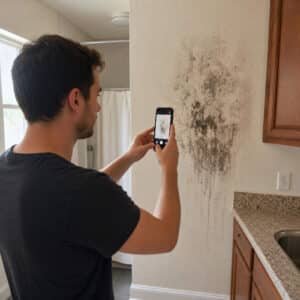
Texas mold disclosure is one of the parts of a Houston home sale most sellers underestimate. Houston’s humidity, hurricane history, and slab foundation construction mean a meaningful share of homes have had some kind of moisture issue at some point. State law does not require sellers to test for mold they don’t know about, but it does require them to disclose what they do know, and it builds a specific certificate disclosure into the standard real estate contract. Get the disclosure right and the transaction closes cleanly. Get it wrong and you can face a lawsuit years after the sale.
Important: This is general information, not legal advice. Real estate disclosure rules apply differently depending on the specific facts of your situation. If you’re unsure what to disclose, consult a Texas real estate attorney before signing the Seller’s Disclosure Notice.
What Does Texas Law Require Sellers to Disclose About Mold?
Texas mold disclosure operates through two main legal hooks: the general Seller’s Disclosure Notice under Texas Property Code §5.008, and the Certificate of Mold Remediation rule under Texas Occupations Code §1958.154.
Under §5.008, sellers of residential real property must provide a written disclosure of known material defects. The standard Seller’s Disclosure Notice form asks directly about water damage, water penetration, and toxic mold. If a seller knows about a current mold issue, past mold remediation, or moisture conditions that have led to mold, those must be marked on the notice and explained.
Under §1958.154, any mold remediation performed on the property in the past five years that was significant enough to require a Certificate of Mold Remediation must be disclosed to the buyer. The certificate itself, not just a mention of it, must be provided.
The key word in both statutes is “known.” Texas does not require sellers to hire inspectors and search for mold they have no awareness of. But once a seller has knowledge of a mold issue, by any source, the obligation to disclose attaches. That includes information from a prior home inspection, a contractor’s invoice, an insurance claim, or even a verbal mention from a neighbor.
The TREC Contract’s Mold Disclosure Clause (Paragraph 6E(11))
The current Texas Real Estate Commission One to Four Family Residential Contract (Resale), form TREC No. 20-18, includes mold disclosure directly inside the contract. Paragraph 6E(11) of the official TREC form requires the seller to deliver to the buyer each Certificate of Mold Damage Remediation issued under §1958.154 of the Texas Occupations Code during the five years preceding the sale.
This addition, which became mandatory for use starting January 3, 2025, means the certificate disclosure is now a contract obligation, not just a statutory one. A seller who fails to provide the certificate may be in breach of contract, not only in violation of the disclosure statute. That distinction matters because it gives the buyer additional remedies, including the right to terminate the contract under certain conditions and to pursue contractual damages.
Real estate agents handling Houston transactions should be checking this paragraph against the seller’s records before listing. If a Certificate of Mold Remediation was issued in the past five years, it goes in the file from day one. If no certificate was issued because the mold area was under the 25 contiguous square foot threshold, the disclosure shifts to the Seller’s Disclosure Notice instead.
What Is a Certificate of Mold Remediation, and When Do You Need One?
A Certificate of Mold Damage Remediation is a Texas-specific document issued by a TDLR-licensed mold assessor after they verify that a mold remediation project was completed properly. The certificate confirms the affected area was remediated according to state standards and the underlying moisture problem was addressed.
Texas law requires a licensed mold assessor and licensed mold remediation contractor when the affected mold area is 25 contiguous square feet or larger. Below that threshold, licensed remediation is not required and a Certificate of Mold Remediation is not issued. This is why some sellers say “I had mold cleaned but there’s no certificate.” They’re typically describing a small area that did not trigger the licensing requirement.
For mold areas above the 25 contiguous square foot threshold, the certificate is essential. It does two things at once for a future seller:
- It satisfies the §1958.154 disclosure requirement when the home eventually sells
- It documents that the work was done by licensed professionals to state standards, which gives buyers confidence and helps preserve property value
Sellers who paid for remediation but never received a certificate, even though the work was clearly above the 25 contiguous square foot threshold, should request documentation from the original remediation contractor. Missing paperwork is one of the most common audit issues in mold-related real estate disputes.
Why Lenders Care Even When Buyers Don’t
Disclosure is the legal problem. Financing is the practical one, and it stops more Houston sales than disclosure does.
Most lenders will not fund a home with visible or active mold until remediation is complete and an independent clearance test confirms the affected area passed. That single condition shrinks your buyer pool to cash offers and can stall a deal that is already under contract, sometimes days before closing.
This is why the documentation sequence matters more than the disclosure language. A seller holding a clearance report from an independent assessor has an answer for the lender, the appraiser, the buyer’s agent, and the buyer’s inspector, all from one document. A seller holding only a remediation invoice has an answer for none of them.
Should I Get a Pre-Listing Mold Inspection?
A pre-listing mold inspection is a smart move for any Houston seller whose home has had water damage, plumbing leaks, roof issues, hurricane impact, or any history of musty smells or visible moisture. Testing before you list puts you in control of the information rather than reacting to a buyer’s inspector during the option period.
Four practical advantages:
- No surprises. You learn what is there before a buyer’s inspector does, so nothing derails the deal at the last minute.
- Control of timing. You can address the issue before listing rather than during a tense negotiation with the clock running.
- Accurate disclosure. A documented report lets you disclose precisely instead of guessing, which is what actually protects you legally.
- Buyer confidence. A clean clearance report after a handled issue reassures buyers rather than scaring them off. Uncertainty is what kills deals, not documented history.
Houston is the kind of climate where this matters more than most. Hurricane Harvey in 2017, repeated tropical storms, and decades of slab leak prevalence mean a substantial portion of Houston housing stock has at least one historical moisture event. A pre-listing assessment gives the seller a clear answer on whether any of that history is still showing up in the home.
For buyers worried about the other side of the transaction, our guide for Houston homebuyers walks through what to ask before closing and how to read an inspection report.
How to Handle Mold Before Selling: The Three-Step Sequence
If a pre-listing inspection turns up mold, the fix has a specific order, and the independence between the steps is what makes the paperwork hold up.
- Independent assessment. A TDLR-licensed assessment company inspects, samples, documents the affected area, and identifies the moisture source. If the area crosses 25 contiguous square feet, the assessor writes a remediation protocol that defines the scope of work.
- Remediation by a separate licensed contractor. Texas law prohibits the same company from assessing and remediating the same project. You hire any licensed remediation contractor you choose, and they work from the protocol rather than writing their own scope.
- Independent clearance testing. After the work, an independent assessor re-inspects and re-samples to verify the area actually passed. Clearance testing is what produces the document a lender, buyer, or attorney will accept.
Skip step three and you have a remediation invoice, which proves somebody was paid. The clearance report proves the problem is resolved. Those are not the same thing, and buyers’ agents increasingly know the difference.
Do I Have to Disclose Mold If It Was Cleaned Years Ago?
Yes, in most cases. The Texas Property Code §5.008 disclosure obligation applies to known material defects, and past mold is generally considered material. Even if the mold was professionally remediated and the area has shown no problems since, the historical condition remains a disclosable fact.
The five-year window in §1958.154 applies specifically to the Certificate of Mold Remediation requirement. Outside that window, the certificate itself may no longer need to be furnished, but the underlying knowledge of a prior mold issue still belongs on the Seller’s Disclosure Notice. Texas courts have generally favored buyers when sellers tried to argue that older mold history was no longer disclosable.
The cleanest approach is to disclose any known mold history, regardless of how long ago, and to attach supporting documentation showing the issue was properly addressed. That kind of thorough disclosure typically helps the sale rather than hurting it, because buyers see a documented and resolved problem rather than wondering what else they don’t know.
What Happens If I Don’t Disclose Mold?
Failing to disclose known mold in a Texas home sale can lead to several different legal consequences:
- Breach of contract. If the TREC contract was used and Paragraph 6E(11) applied, failure to deliver a required Certificate of Mold Remediation is a contract breach. The buyer may have remedies including specific performance, damages, or termination depending on timing.
- Violation of §5.008. A seller who knew about mold and did not mark it on the Seller’s Disclosure Notice may be liable for the buyer’s damages tied to that nondisclosure, including remediation costs and diminished property value.
- Deceptive Trade Practices Act claims. The Texas DTPA allows buyers to sue for knowing or intentional concealment of material defects, with potential treble damages and attorney’s fees.
- Contract rescission. In extreme cases, a court may order the sale unwound entirely, with the seller returning the purchase price and the buyer returning the property.
- Reputational and future-sale issues. A litigated mold disclosure case enters public record and can complicate future real estate dealings.
The financial exposure on a nondisclosure case routinely exceeds what a proactive pre-listing inspection and proper disclosure would have cost. Sellers who think they’re protecting the sale by staying silent typically end up paying more later.
There is also a practical point that gets missed. Buyers in Houston increasingly order their own mold inspections, so undisclosed mold tends to surface during the option period anyway. When it does, the seller has lost the deal and the buyer’s trust at the same time.
Why Independent Testing Matters for Sellers
Sellers who get mold testing done by a remediation company face the same conflict of interest problem buyers do. A company hoping to win cleanup work has a financial reason to find mold or to suggest more aggressive remediation than the actual conditions justify. The reverse is also true. A company that already did remediation on the property has a reason to declare the area clean even if it isn’t.
Independent testing avoids both problems. Mold Testing Houston operates under TDLR Mold Assessment Company License ACO1245 as a mold assessment company only. We do not perform remediation, and Texas rules prohibit the same license holder from performing both assessment and remediation on the same project. That separation is what makes our reports credible in real estate disclosure contexts.
When our pre-listing inspection comes back clean, the seller has a third-party document to attach to disclosure. When it comes back with findings, the seller has a clear scope of work to address before listing rather than getting blindsided by the buyer’s inspection. If you want the full checklist for vetting any assessor, read our guide on how to find a mold inspector in Houston.
If the home is being sold after a prior remediation event, an independent clearance test is often the right move even years later, especially when the original Certificate of Mold Remediation is missing or the original assessor is no longer reachable. A fresh clearance from an independent assessor confirms current condition and gives the buyer documented assurance that the past issue is genuinely resolved.
What a Pre-Listing Assessment Includes
A standard residential inspection from Mold Testing Houston is a flat $550 for homes up to 2,500 square feet. That covers the full visual inspection, moisture readings on key surfaces, and up to two lab-analyzed samples: air sampling from the main living areas with an outdoor control, plus surface samples on any visible growth. Additional samples are $85 each and we collect them only with your approval. Properties over 2,500 square feet are quoted individually, so call 832-838-9387 with the square footage.
Every sample is analyzed by EMSL Analytical, an AIHA-LAP accredited laboratory, and your written report is delivered within one business day of sampling. The report is written so a real estate agent, a buyer’s attorney, or a title company can read it without translation, which is the point of ordering it before you list rather than after somebody else does.
For a fuller breakdown across inspection types, see our guide to mold testing cost in Houston, or browse all mold testing services.
Frequently Asked Questions
Is Texas a mandatory disclosure state?
Yes. Texas Property Code §5.008 requires sellers of residential property to complete a written Seller’s Disclosure Notice covering known material defects, and the standard form asks specifically about water damage, water penetration, and toxic mold. Texas is stricter than many states on the mold side, because Occupations Code §1958.154 adds a separate requirement to hand over any Certificate of Mold Remediation issued in the past five years.
Do Texas sellers have to test for mold before selling?
No, Texas law does not require sellers to test for mold they don’t already know about. The disclosure obligation applies only to known mold issues. A pre-listing inspection is still often a smart investment, because it surfaces problems before the buyer’s inspector finds them and gives the seller supporting documentation for the disclosure.
Can you sell a house full of mold?
Legally yes, provided you disclose it. Practically it is much harder, because most lenders will not finance a home with visible or active mold until remediation is complete and clearance testing confirms the area passed. That limits you to cash buyers, typically investors who price the mold into their offer at a discount well beyond what remediation would have cost. Sellers who remediate and clear first usually net more, even after paying for the work.
Does mold devalue a house?
Undisclosed or unresolved mold does. Documented and resolved mold usually does not, or does far less. The variable is not whether the home ever had mold, it is whether the buyer can see that the problem was identified, corrected by a licensed contractor, and independently verified afterward. Uncertainty is what buyers discount. A clearance report from an assessment-only company removes the uncertainty.
Who pays for a mold inspection, the buyer or the seller?
Either, and it depends on when it happens. A buyer ordering an inspection during the option period pays for it themselves. A seller ordering a pre-listing assessment pays for it themselves. Buyers pay in the large majority of Houston transactions, simply because most sellers do not test in advance. Sellers who do pay for it tend to be the ones who already know there is history to document.
Does a realtor have to disclose if a house has mold?
Texas real estate license holders have a duty to disclose known material defects to all parties in a transaction, and that duty is independent of the seller’s own disclosure obligation. An agent who knows about a mold issue generally cannot rely on the seller’s silence. This is one reason listing agents ask about prior water damage during the intake conversation, and why a documented assessment protects the agent as well as the seller.
Can you sue a seller for not disclosing mold in Texas?
Buyers do bring these claims, generally under theories including fraud, statutory nondisclosure under §5.008, breach of contract where the TREC certificate requirement applied, and the Deceptive Trade Practices Act. Outcomes turn heavily on evidence that the seller actually knew, which is the difficult part in most cases. Anyone considering a claim should speak with a Texas real estate attorney, since this is a fact-specific area and nothing here is legal advice.
What if I sold the home as-is? Do I still have to disclose mold?
Yes. Selling a property as-is in Texas does not eliminate the disclosure requirement under Texas Property Code §5.008. As-is means the buyer accepts the current condition without warranty for repairs, but it does not give the seller permission to conceal known material defects, including mold.
How long does a seller stay liable for undisclosed mold after closing?
Texas statute of limitations on nondisclosure claims is generally four years for fraud and breach of contract claims, though the clock can start later if the buyer can show they only discovered the issue at a later date. Some claims under the Deceptive Trade Practices Act have a two-year statute of limitations.
I found mold after I bought the house. What should I do?
Document it before anything else. Photograph the growth and any water staining, note the date, and get an independent assessment from a licensed assessor rather than a remediation company, so the report carries no financial interest in the finding. Pull the Seller’s Disclosure Notice and check what was marked. Then talk to a Texas real estate attorney about whether the timeline and the evidence support a claim. The assessment report is the piece of documentation every one of those conversations depends on. Our guide on what to do if you found mold after buying a house walks through each step.
What is the 25 contiguous square feet rule for Texas mold remediation?
Texas law requires mold remediation to be performed by a TDLR-licensed contractor when the affected area is 25 contiguous square feet or larger, working from a protocol written by a separate licensed assessor. Below that threshold, the work can be done without licensing, and no Certificate of Mold Remediation is issued. Above the threshold, licensing is required, and the certificate triggers the disclosure obligation under §1958.154.
Does the buyer’s inspector usually find mold I didn’t know about?
Sometimes. A typical home inspector is not a licensed mold assessor and is not authorized to take samples, but they can identify visible mold growth, water staining, and moisture readings that point to a problem. When a buyer’s inspector flags something mold-related, the buyer often follows up with a licensed mold assessor. This is the moment when undisclosed prior mold history typically surfaces.
How much does a pre-listing mold inspection cost in Houston?
Mold Testing Houston charges a flat $550 for a standard residential assessment on homes up to 2,500 square feet, including the on-site inspection, up to two EMSL Analytical lab-analyzed samples, and the written report. Additional samples are $85 each with your approval, and larger properties are quoted individually. The price is the same whether mold is found or not.
Get a Pre-Listing Mold Inspection in Houston
If you’re preparing to sell a Houston home and want to handle the mold disclosure side correctly from the start, Mold Testing Houston provides the independent pre-listing assessment that protects sellers in disclosure. We have served Houston since 2017 under TDLR Mold Assessment Company License ACO1245, we perform assessment and testing only, and we never bid on remediation.
Call 832-838-9387, contact our team with questions, or book your inspection online. Same-day appointments are often available across Greater Houston, and your report lands within one business day of sampling.