The difference between mold inspection vs mold testing comes down to one question each answers. An inspection answers “Where is the moisture, and what is it damaging?” Testing answers “What is in the air or on this surface, and how does it compare to outside?” You usually want the inspection first, because mold always follows water, and a lab report can’t fix a leak it never found.
Houston homes give mold plenty of chances. Attic air handlers drip, AC drain lines clog, slabs leak under floors, and summer humidity stays high for months. Knowing which service you need saves you money and gets you a clear answer faster.
What Is the Difference Between Mold Inspection vs Mold Testing?
A mold inspection is a hands-on investigation of the home, and mold testing is a lab analysis of samples collected during that visit. The inspection looks for causes. The testing measures results. A good mold assessment uses both, in the right order.
What Happens During a Mold Inspection?
During an inspection, a licensed assessor walks the home room by room and checks the places water hides. That includes walls near plumbing, ceilings under bathrooms, the attic, the air handler and drain pan, windows, and floors near the slab. The assessor uses a moisture meter to find damp materials behind paint and drywall, and a hygrometer to measure humidity. You get photos, readings, and a written explanation of what the assessor found.
The inspection gives you three things a lab can’t:
- The moisture source. A leak, condensation, or drainage problem that feeds the growth.
- The extent. Which rooms and materials the water reached.
- The next step. Whether you need a repair, a cleanup plan, or nothing at all.
What Happens During Mold Testing?
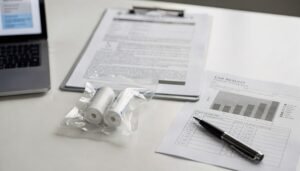
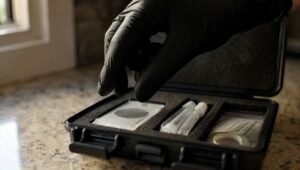
During mold testing, the assessor collects samples and ships them to an accredited lab. Air samples pull a measured amount of air through a cassette that traps spores. Surface samples use a swab or tape lift on a specific spot. The lab then counts and identifies what it finds. Our samples go to EMSL Analytical, an AIHA-accredited lab. If you want to know which sample type fits your situation, our guide to mold air sampling vs surface sampling walks through both.
Every air test also includes an outdoor sample taken the same day. That outdoor sample sets the baseline. Spores float in every Houston backyard, so indoor numbers only mean something next to the outdoor numbers.
Mold Inspection vs Mold Testing at a Glance
| Mold Inspection | Mold Testing | |
|---|---|---|
| Main question | Where is the moisture, and what did it reach? | What mold is present, and how much compared to outside? |
| How it works | Visual check, moisture meter, humidity readings, photos | Air or surface samples sent to an accredited lab |
| What you get | Findings, photos, moisture readings, recommendations | Lab results with spore types and counts |
| Finds the cause? | Yes | No |
| Best for | Leaks, stains, musty smells, pre-purchase checks | Hidden growth, documentation, clearance after cleanup |
At Mold Testing Houston, the two come together in one visit. Our mold inspection and testing in Houston includes the full inspection plus up to two lab samples for one flat price, so you never have to choose between finding the cause and proving the result.
Do You Need Mold Inspection, Mold Testing, or Both?
Most Houston homeowners need an inspection, and many also need testing. Your situation decides the mix. Here is how it usually plays out:
- You can see mold and you know about a leak. Start with the inspection. It maps how far the water spread and whether the job needs a formal remediation protocol. Testing may add little here.
- You smell mustiness but can’t find the source. Get both. The inspection hunts for hidden moisture, and air samples show whether indoor spore levels run higher than outside.
- You’re buying a home in your option period. Get both. The inspection documents conditions, and lab results give you something concrete to negotiate with before the option period closes.
- You’re a renter or landlord in a dispute. Get both. A written report with lab results carries more weight than photos and opinions.
- A remediation crew just finished. Book clearance testing. An independent assessor re-inspects and re-samples to confirm the work passed. Clearance testing starts at $750 for a single remediated area.
When Is Mold Testing Not Worth Paying For?
Mold testing is not worth paying for when you can already see the growth and the results won’t change your plan. The U.S. Environmental Protection Agency says that in most cases, sampling is unnecessary when mold is visibly growing. The EPA also notes that no federal limits exist for mold or mold spores, so a lab number alone can’t tell you whether a home “passes.” You can read that guidance in the EPA’s Brief Guide to Mold, Moisture and Your Home. For a fuller answer, see is a mold inspection worth it in Houston.
That is exactly why the inspection matters more than any single test. If a black stain spreads across the drywall under your kitchen sink, you already know you have growth. What you need to know next is where the water comes from and how far it traveled. An honest assessor tells you when extra samples won’t help, and we only add samples beyond the included two when you approve them.
How Accurate Are Mold Inspections and Mold Tests?
Mold inspections and tests are accurate when a licensed assessor collects the right samples in the right places and compares them to an outdoor baseline. Accuracy depends on how the samples get collected as much as on the lab. The EPA recommends that trained professionals design the sampling and that labs follow methods from groups like the American Industrial Hygiene Association (AIHA).
A few things make results reliable:
- An outdoor control sample. Indoor numbers only make sense next to outdoor numbers from the same day.
- Smart sample placement. The assessor samples where the moisture readings point, which beats sampling at random.
- An accredited lab. EMSL Analytical holds AIHA accreditation, so the lab follows recognized methods.
- Moisture data to match. A high spore count next to a wet wall tells a much clearer story than a spore count alone.
Keep in mind that an air sample is a snapshot of one moment. Doors, fans, and the AC cycle all change what floats in the air. That is why a good report ties lab numbers back to what the assessor found in person.
Can I Test for Mold Myself?
You can buy a DIY mold test, but it rarely tells you anything useful. Many store kits use a dish that collects whatever lands on it. Mold spores exist in nearly every home, so the dish almost always grows something. The kit has no outdoor baseline, no moisture readings, and no way to find the source.
A DIY kit also can’t document anything for a buyer, seller, landlord, or insurer. If you need an answer you can act on, a professional mold assessment gives you the source, the extent, and lab results in one written report. Once you have one, here is how to read a mold inspection report.
How Much Does a Mold Inspection Cost in Houston?
A mold inspection from Mold Testing Houston costs a flat $550 for homes up to 2,500 square feet, and that price includes testing. You get the full inspection, moisture and humidity readings, up to two lab samples analyzed by EMSL Analytical, and a written report within one business day. If your home needs more than two samples, each extra sample costs $85, and we only add them with your approval.
Some companies advertise a “free” inspection and make their money on the cleanup. Others quote a low inspection price and charge separately for every sample. For a full breakdown of what drives the price, read our guide to mold testing cost in Houston.
Who Can Do Mold Inspection and Mold Testing in Texas?
In Texas, a mold assessor licensed by the Texas Department of Licensing and Regulation (TDLR) handles both mold inspection and mold testing. Texas law treats inspection, sampling, and writing a remediation protocol as mold assessment. Once contamination passes 25 contiguous square feet, Texas also requires the assessor and the remediation company to be separate parties on the same project.
That separation protects you. The company that tests your home should never profit from the cleanup it recommends. Mold Testing Houston holds TDLR Mold Assessment Company license ACO1245, and founder Ran Bozaglo holds Mold Assessment Consultant license MAC1839. We have done assessment only since 2017, and we never perform remediation. You can look up both license numbers on TDLR’s public license search. Comparing several firms? Our guide to mold testing companies in Houston covers the four checks that matter.
Schedule Mold Inspection and Testing in Houston
If you’re weighing mold inspection vs mold testing, you don’t have to pick one. Our flat $550 visit covers both, with a written report in one business day and same-day appointments often available across the Houston area. Book your inspection online, or contact our team with questions and we’ll help you figure out what your home actually needs.