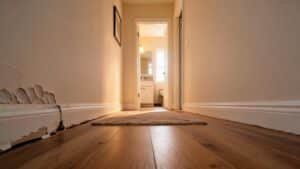
Mold behind walls usually starts with water you never saw: a slow drip from a supply line, a sweating AC line, or rain that slips past a window. Your side of the wall looks fine while the paper backing on the other side stays damp. You can spot the warning signs yourself, but you need moisture readings and lab results to know what is actually back there.
Mold Testing Houston has provided independent mold assessment across greater Houston since 2017. We test and document. We never bid on the cleanup, so nothing we find in your walls creates work for us.
What Are the Signs of Mold Behind Walls?
The most reliable sign of mold behind walls is a musty smell that stays in one room or along one wall, even after you clean. Watch for these clues too:
- Stains or shadows on drywall, often near the floor or below a window.
- Bubbling, peeling, or cracking paint, which means moisture is pushing out from behind.
- Soft or swollen baseboards and trim that pulls away from the wall.
- Rust on outlet covers, screws, or nail heads, a sign of repeated condensation.
- A wall that feels cool or damp compared with the rest of the room.
One sign on its own can have a simple cause. Two or three together on the same wall usually point to trapped moisture. Our guide to the signs of mold in your Houston home covers the false alarms too.
Why Do Houston Homes Get Mold Inside Walls?
Houston homes get mold inside walls because water reaches the wall cavity and has no way to dry out. The EPA’s guide to mold and moisture lists the back side of drywall and the inside of walls around leaking or condensing pipes among the most common places for hidden mold.
Here, the usual water sources are:
- Slab leaks. Water travels along the bottom of the wall and wicks up the lower drywall. Read more about mold after a slab leak.
- AC lines. Drain lines and refrigerant lines run inside walls, and cold lines sweat in humid air.
- Window and door leaks. Wind-driven rain gets past failed caulk and flashing during storms.
- Plumbing behind kitchens and bathrooms. A pinhole leak can drip for months without leaving a single stain.
Older neighborhoods see more of this. In Sugar Land, many 1980s and 1990s homes in First Colony and Sugar Creek deal with aging plumbing and roof leaks, and both feed hidden mold. If that sounds like your house, our mold inspection in Sugar Land starts with exactly these walls.
How Do Inspectors Find Mold Behind Walls Without Cutting Holes?
Inspectors find mold behind walls without cutting holes by tracing the moisture first. Mold can’t grow without water, so a wet wall cavity is the target.
- Moisture meters read the water content of drywall and trim. A pin meter measures one spot, and a pinless meter scans a whole wall.
- Thermal imaging shows cool areas where water evaporates. The camera doesn’t see mold, but it tells the inspector where to measure.
- A borescope, a thin camera, can look inside a wall cavity through a small opening when the readings point there.
- Air sampling compares spores in the room against an outdoor sample taken the same day. Here’s how labs read those numbers: what a normal mold spore count looks like.
- Surface samples confirm what’s growing on any visible spot, like the back of a baseboard or an outlet box.
At Mold Testing Houston, every sample goes to EMSL Analytical, an AIHA-LAP accredited lab, and your written report arrives within one business day of sampling.
Should You Cut Into the Wall to Check?
You shouldn’t cut into a wall to look for mold before anyone measures it. Opening a moldy cavity can spread spores into the room, and the EPA warns that disturbing hidden mold, such as peeling back wallpaper with growth underneath, can release a large burst of spores.
Cutting first also destroys the evidence. Once the drywall comes out, nobody can show where the water went, how far it spread, or whether the source still runs. That record matters for insurance, for a home sale, and for pricing the cleanup fairly.
How Long Does It Take for Mold to Spread in Walls?
Mold can start growing in a wet wall within 24 to 48 hours, which is why the EPA says to dry water-damaged areas within that window. After that, the pace depends on how wet the cavity stays.
A cavity that dries out stops the growth, but the growth doesn’t go away. A cavity that stays damp from an active leak keeps feeding mold along the path of the water, up the drywall paper and across the framing.
Is It Okay to Just Paint Over Mold?
No, painting over mold doesn’t fix it. The EPA says not to paint or caulk moldy surfaces and notes that paint over mold will likely peel.
Paint also hides the stain from the next person who looks, including a buyer’s inspector. If the water source still runs, the mold keeps growing behind the fresh coat.
What Happens If My House Tests Positive for Mold?
If your house tests positive for mold, the next step depends on how much is growing and where the water comes from. Every home has some mold spores in the air, so a lab result means the most when you compare it with the outdoor sample.
- Small area with a known cause: fix the water, then clean or replace the material.
- 25 contiguous square feet or more: Texas requires a written remediation protocol from a licensed assessor, and a separate licensed remediator does the work.
- After the cleanup: independent clearance testing confirms the job passed before the wall closes up.
Find Out What’s Behind Your Walls
If you smell mustiness or see stains and want to know what is actually behind the drywall, an independent assessment answers it with measurements before anyone starts cutting.
Mold Testing Houston operates under TDLR Mold Assessment Company license ACO1245 and has assessed Houston homes since 2017. A flat $550 inspection covers moisture mapping, thermal imaging, up to two lab-analyzed samples against an outdoor control, and a written report within one business day of sampling. Same-day appointments are often available.
Book online, call 832-838-9387, or contact us and tell us which wall has you worried.