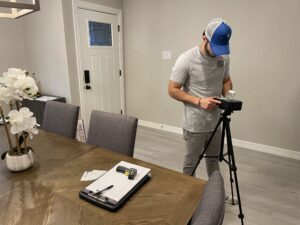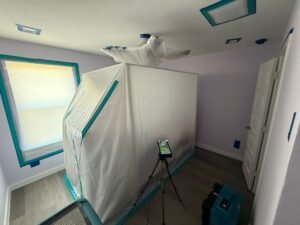

Selling a house with mold in Houston is manageable, but only if you handle it openly and with documentation. Texas disclosure law and a buyer’s own inspection mean mold rarely stays hidden, and trying to conceal it creates far bigger problems than the mold itself. Getting ahead of it protects your sale and your liability. At Mold Testing Houston, we have helped Houston sellers document and resolve mold concerns as a TDLR-licensed assessment company since 2017.
This guide covers your disclosure obligations, whether to test before listing, how to handle remediation, and how documentation protects your sale. If you are preparing to list and want to know exactly what you are dealing with, our mold testing services deliver lab results in 24 hours.
Do You Have to Disclose Mold When Selling a House in Texas?
Yes, in Texas you must disclose known mold problems when selling a house. The state’s seller’s disclosure notice asks about known defects, including conditions like water damage and mold, and knowingly concealing them exposes you to legal liability after the sale.
The key word is “known.” You are required to disclose issues you are aware of, which is one reason getting an inspection can actually help, it replaces uncertainty with documented facts you can disclose accurately. According to the Texas Department of Licensing and Regulation, mold assessment and remediation are regulated activities in Texas, and proper documentation from a licensed assessor gives you a clear record of the property’s condition. Disclosing a handled problem is far safer than hoping a buyer’s inspector misses it.
Should You Test for Mold Before Listing?
Testing for mold before listing is usually a smart move, because it puts you in control of the information instead of reacting to a buyer’s inspection. Knowing the scope early lets you decide how to handle it on your own timeline.
The advantages of testing first are practical:
- No surprises. You learn what is there before a buyer’s inspector does, so nothing derails the deal at the last minute.
- Control of timing. You can address the issue before listing rather than during a tense negotiation with the clock running.
- Accurate disclosure. A documented report lets you disclose precisely and honestly, which protects you legally.
- Buyer confidence. Showing a clean clearance report after handling a past issue can actually reassure buyers rather than scare them off.
How Do You Handle Mold Before Selling?
You handle mold before selling by getting it independently assessed, having it remediated by a licensed contractor if needed, and then getting independent clearance testing to confirm it was fixed. That sequence gives you documentation at every step.
The process works in a specific order, and the independence between steps matters. First, an assessment company like ours inspects and documents the problem. If remediation is required, a separate licensed remediation contractor does the removal, since Texas law prohibits the same company from assessing and remediating the same project. Finally, an independent company performs clearance testing to verify the work passed. That final clearance report is what you hand a buyer to prove the issue was resolved correctly.
What Happens If You Hide Mold From a Buyer?
If you hide known mold from a buyer, you risk the deal collapsing when their inspector finds it, and you expose yourself to legal liability for failure to disclose after closing. Concealment almost always costs more than disclosure.
Buyers increasingly order their own mold inspections, especially in Houston, so undisclosed mold tends to surface during the option period anyway, often killing trust and the deal along with it. In fact, our guide on mold inspection for home buyers shows exactly what the buyer’s side is looking for. Worse, if it is discovered after closing and you knew about it, you can face legal exposure for nondisclosure. Handling it openly with documentation is not just the ethical path; it is the one that actually protects your sale and your finances.
Why Independent Documentation Protects Your Sale
Independent documentation protects your sale because a report from an assessment-only company carries credibility that a remediation company’s self-assessment cannot. Buyers, agents, and their inspectors trust a neutral third party.
Because we test and do not remediate, our reports reflect only what was actually found and, after remediation, whether the work genuinely passed. That neutrality is exactly what makes the documentation persuasive to a cautious buyer. A clearance report from an independent company tells the buyer the problem was handled and verified by someone with no stake in the outcome, which is often what keeps a deal together.
Sell Your Houston Home With Confidence
If you are selling a Houston home and want to handle a mold concern the right way, Mold Testing Houston is ready to help. We are an independent, TDLR-licensed company with same-day scheduling availability and lab results in 24 hours. You can contact our team with questions, call us at 832-838-9387, or book your inspection online.