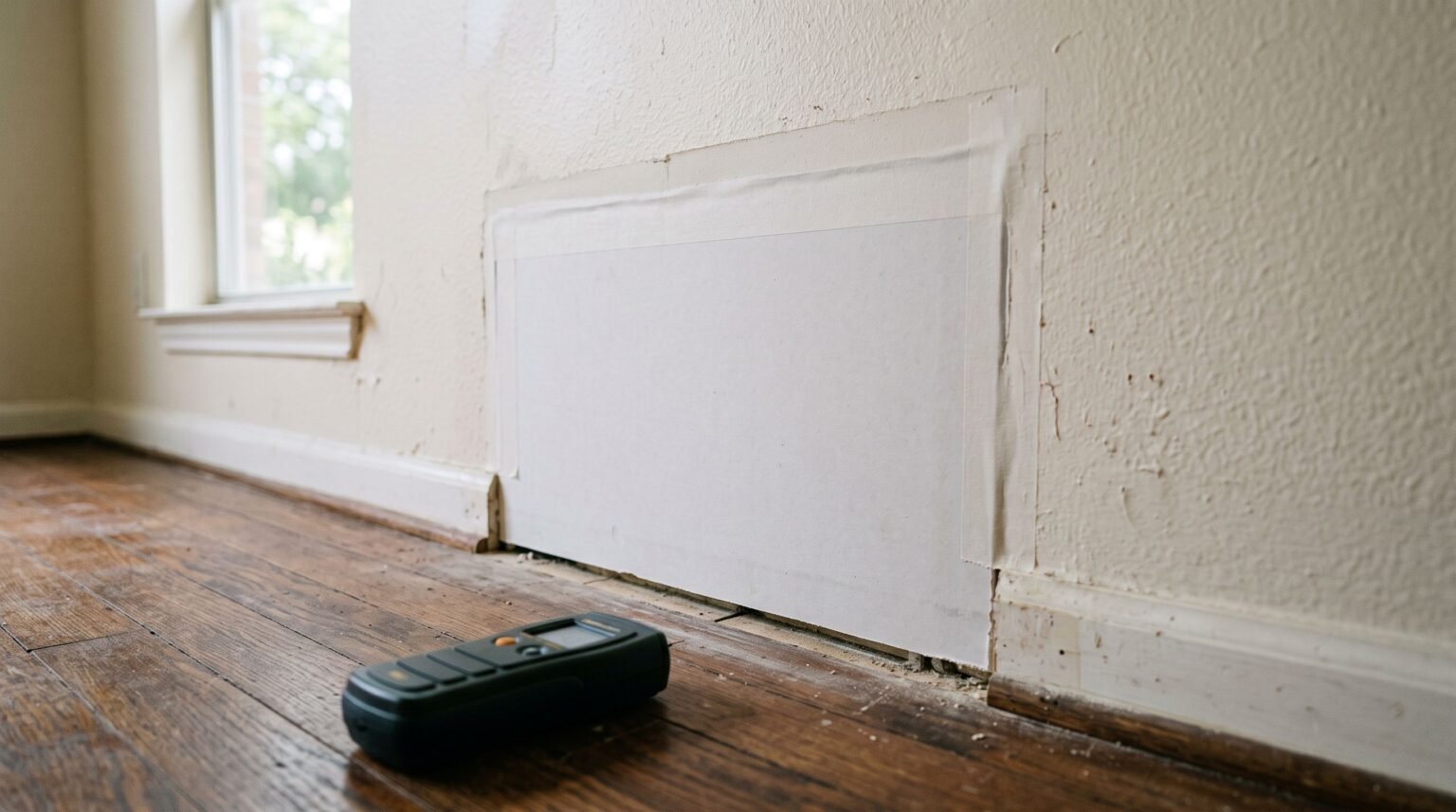
Will mold come back after remediation? It comes back when the moisture does, and almost never for any other reason. The EPA puts it plainly in its guidance for homeowners: clean up the mold without fixing the water problem and the mold problem will most likely return.
That answer is on every page you will read today. Here is the part nobody covers. Fixing the water and knowing the water got fixed are two different things, and only one of them is something you can confirm.
Mold Testing Houston has been an assessment-only company since 2017 under TDLR license ACO1245. We do not perform remediation, so this guide has no cleanup to sell you.
How Often Does Mold Come Back After Remediation?
Nobody publishes a reliable number, and you should be skeptical of pages that do. Several sites ranking for this question cite figures like a 70 percent recurrence rate or an 80 percent reduction from professional work, with no source attached to any of them.
What we can tell you from Houston jobs is the pattern. Recurrence tracks the moisture source, not the quality of the scrubbing. Two categories behave very differently.
A one-time water event usually stays fixed. A burst pipe, an overflowing washing machine, a roof torn open in a storm. The water arrived, it got repaired, and the conditions that caused the growth are gone.
A chronic moisture condition usually does not. A bathroom with no working exhaust fan. An attic with blocked soffit vents. An AC condensate line that sweats every summer. A slab that still releases moisture months after a leak. In those cases the cleanup removes the growth and the building recreates the conditions.
Houston sits on the wrong side of that line more often than most cities. The EPA recommends keeping indoor relative humidity below 60 percent, ideally between 30 and 50 percent. Houston runs around 75 percent outdoors for most of the year, which means the ambient conditions here already favor regrowth before any leak is involved.
Can Mold Ever Be Fully Remediated?
The growth can be removed completely. Every spore cannot, and no honest company will tell you otherwise.
Mold spores exist in outdoor air. They come inside every time a door opens, on clothes, on pets, through the HVAC intake. The EPA states that it is impossible to get rid of all mold and mold spores indoors, and that a background level will remain after any cleanup.
Those background spores are not a problem. They sit in house dust and do nothing, because they need water to grow. That is why the target of remediation is the moisture and the contaminated material, not sterility.
So a house cannot be 100 percent mold free, and it does not need to be. It needs to be dry.
My Mold Came Back After I Cleaned It. What Should I Do?
Stop cleaning it and find the water. Growth that returns to the same spot is telling you the moisture source is still active, and every round of scrubbing buys a few weeks at most.
Three things to check before you clean again:
- Look above and behind, not at the stain. Water travels. Surface growth on a baseboard often traces to a leak several feet away or a story up.
- Check whether it returns on a schedule. Growth that comes back every summer points at humidity or AC condensate. Growth that returns after heavy rain points at the roof or the envelope.
- Measure instead of guessing. A hygrometer costs about fifteen dollars. If the room sits above 60 percent relative humidity, that alone explains the regrowth.
One thing to avoid. Bleach on porous material lightens the stain without reaching growth inside the drywall or wood, and the water in the bleach adds moisture to material that already has too much. The EPA does not recommend biocides as routine practice during cleanup, and notes that dead mold can still cause reactions, so killing it is not the same as removing it.
How Do You Know the Remediation Actually Worked?
You measure it, and the measurement has to come from someone who did not do the work.
This is where every other page on this topic stops. The EPA’s own guidance lists what a finished job looks like, then admits the assessment is ultimately a judgment call with no easy answer. That is honest, and it is also the reason an independent check exists.
Four signals, in the order they become available:
- Moisture readings through the structure. Framing, bottom plates, subfloor, and slab. A meter reading dry at the drywall face says little about the cavity behind it.
- Smell, about a week after the work. A musty odor that appears once the house is supposedly dry is the most reliable free indicator you have.
- What happens when the AC runs. If the smell arrives with the system and fades when it stops, look at the air handler, the drip pan, and the condensate line.
- Air sampling against an outdoor control. The only one that produces a number you can compare.
That last one has a formal name. Clearance testing compares indoor spore counts against outdoor air at the same property on the same day, and it verifies the finished work against the criteria set before the job started. It happens after the work and before anything gets closed back up.
Those criteria come from the mold remediation protocol, which a licensed assessor writes before the contractor begins. Without a protocol there is no standard to test against, which is why clearance and the protocol travel together.
If the numbers come back elevated, that is useful rather than disastrous. Our guide on what happens if you fail a mold clearance test covers the next steps and who pays for them.
What Time of Year Is Worst for Mold in Houston?
April through October carries the highest risk here, and June through September is the peak.
Three things stack up in those months. Hurricane season delivers water events. AC systems run continuously and produce gallons of condensate a day, which finds its way into building materials when a drain line clogs. Attic temperatures climb past 140 degrees while humid air meets decking that cooled overnight.
That matters for recurrence timing. A remediation finished in January can look perfect for months and fail in July, because the conditions that caused the original problem only return with the season. Our month by month guide to Houston mold season breaks down what drives each part of the year.
Where Does Mold Come Back Most Often in Houston Homes?
Attics lead by a wide margin, and the reason is structural rather than accidental.
Most Houston homes put the air handler in the attic. Add blocked soffit vents, a bathroom fan terminating into the attic instead of through the roof, and decking that condenses moisture overnight, and you have a space that regenerates the original conditions every summer. Cleanup without a ventilation fix typically buys six to eighteen months. Our guide to Houston attic mold and why quotes vary so widely covers that cycle in detail.
After attics, the repeat offenders are wall cavities near slab leaks, HVAC closets, and bathrooms with no working exhaust.
What Should I Throw Away After Mold Remediation?
Porous material that stayed wet goes, because cleaning does not reach growth inside the material itself.
That covers drywall, insulation, carpet padding, ceiling tiles, and particleboard. The EPA notes that absorbent and porous materials may have to be discarded, since mold fills the spaces and crevices in them and becomes difficult or impossible to remove.
Hard, non-porous items usually stay. Glass, metal, tile, and solid wood clean up and dry out. Personal belongings without visible growth can generally be kept, though fabrics may need deep cleaning to remove settled spores.
Your protocol should name what gets removed rather than leaving it to a decision on the day.
Frequently Asked Questions
How soon can mold come back after remediation?
If the moisture source is still active, growth can restart on wet material within 24 to 48 hours, though visible patches usually take one to three weeks to appear. That gap is why a house can look fine at the end of a job and show growth a month later.
What is the success rate of mold remediation?
No credible national figure exists, and any page quoting a precise percentage is inventing it. The useful measure for your house is whether the moisture source was identified and repaired, and whether independent clearance testing confirmed the affected areas returned to normal.
Can you live in a house after mold remediation?
Generally yes, once the work is complete and clearance testing confirms the results. Timing depends on the size of the job, whether containment is still up, and whether reconstruction is finished. Any health question about occupancy belongs with a physician rather than a mold inspector.
Does dried mold still matter?
Yes. Drying makes growth dormant rather than gone. It stays on the material, the spores it produced stay in surrounding dust, and it restarts if the material gets wet again. The EPA notes that dead mold can still cause allergic reactions, so removal matters and not just killing it.
How long should I wait before testing after remediation?
Wait until the structure reads dry and the drying equipment has come off, then test before flooring, baseboards, or new drywall go back in. Testing mid-dry produces numbers that shift as the moisture shifts, and testing after reinstall means pulling up work you just paid for.
Can I use the same company that did the remediation to test it?
In Texas, a licensed company cannot perform both mold assessment and mold remediation on the same project. Beyond the licensing point, a contractor confirming their own work passed is a self-assessment with a payment attached. Independent testing removes the question.
Find Out Whether It Actually Worked
If mold has come back at your Houston home, or you want to confirm that a finished job held, an independent assessment answers it with a measurement instead of an assurance from the company that did the work.
Mold Testing Houston operates under TDLR license ACO1245 and performs assessment and testing only. We never bid on remediation, so nothing we find creates work for us. A flat $550 inspection covers moisture readings through the structure, thermal imaging, air and surface sampling against an outdoor control, EMSL Analytical lab analysis, and a written report in one business day. A Friday inspection means Monday results. Same-day appointments are often available across Greater Houston.
Book online, call 832-838-9387, or contact us and tell us what came back.