
Quick Answer: A failed mold clearance test means the remediated area still shows elevated spore levels, settled dust, or moisture that was never resolved, so the remediation is not finished. The contractor re-cleans the failed areas and a new test is run. In Texas, the licensed assessor running that test cannot be the company that did the cleanup, which is exactly why a failed result carries weight. The contractor almost always covers the re-clean and the retest.
We have failed plenty of Houston jobs that a homeowner was told were finished. That is not a criticism of remediation contractors, it is the reason the independent test exists at all. Mold Testing Houston has run clearance tests across the Houston metro since 2017 under TDLR license ACO1245, and this guide covers what a failure actually means, what happens next, who pays, and how soon you can retest.
If you are still choosing an assessor, our independent clearance testing in Houston page explains the process and what a pass requires.
What does a failed mold clearance test mean?
A failed mold clearance test means the air or surface samples inside the remediated area still show mold spore levels above what is acceptable when compared to the outdoor control sample. In plain terms, the cleanup did not fully work. Either mold is still present, a hidden source is still releasing spores, or the moisture problem that caused the mold was never fixed.
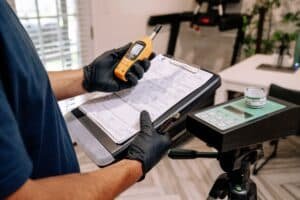
Clearance testing is the final step of a mold project. A licensed assessor takes air samples inside the containment area and compares them to an outdoor baseline taken the same day. There is no single national number that defines a pass or fail. Instead, the assessor looks at whether indoor spore counts are elevated relative to outdoors, whether hazardous species like Stachybotrys or Chaetomium are present, and whether the indoor species mix points to an indoor source. When those signals say the area is not back to normal, the test fails.
A fail is documentation that the job needs more work before anyone moves back in or closes on a sale.
Why do mold clearance tests fail?
Mold clearance tests fail for a handful of common reasons, and almost all of them trace back to work that was rushed or incomplete. Understanding the cause is what tells you how much more work is actually needed.
- The moisture source was never fixed. This is the number one reason. If the roof leak, slab leak, or AC condensate problem that fed the mold is still active, mold regrows before the clearance test even happens. Cleaning mold without fixing the water is wasted effort.
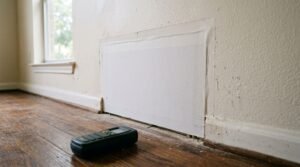
- Hidden mold was missed. Mold behind walls, under flooring, or inside HVAC ductwork keeps releasing spores into the air even after the visible growth is gone. Ducts are the most commonly skipped reservoir, because cleaning them is a separate scope most remediation quotes leave out.
- The area was not cleaned thoroughly. Spores settle on surfaces during demolition. If the contractor skipped the HEPA vacuuming and surface wipe-down, or pulled the containment and air scrubbers too early, settled spores get stirred back into the air during testing.
- Testing happened too soon. Air scrubbers should be off for a period before sampling, and settled dust needs time to clear. A test run in a still-dusty room can show elevated counts even when the cleanup was solid.
- Spores drifted in from outside the containment. Gaps in the plastic sheeting, or contamination in an adjacent room that was never part of the scope, can push the numbers up.
The reason matters because it decides the fix. A moisture source that was never addressed is a bigger problem than a room that just needed another day of air scrubbing.
How long after mold remediation can you retest?
You retest once the re-clean is finished and the area has been left undisturbed long enough for airborne dust to settle, which in most cases means the following day at the earliest. There is no fixed legal waiting period in Texas. The controlling document is your remediation protocol, which should state the conditions required before sampling.
Two things decide the timing. Air scrubbers need to be off for the window your protocol specifies, because running them during sampling artificially lowers the counts and produces a pass that does not reflect normal conditions. And any material that was removed or replaced needs to be fully dry, since damp material will keep feeding spores into the air no matter how well the room was cleaned.
Retesting too early is the most expensive mistake in this process. A second failure means a third test, and the delay compounds if you are trying to close a sale or move a family back in.
What happens after you fail a clearance test?
After a failed clearance test, the remediation contractor returns to the property, re-cleans the areas that failed, and a new clearance test is run once the additional work is done. The written report from the failed test tells the contractor exactly which areas and which conditions triggered the failure, so the re-clean is targeted rather than a guess.
The normal sequence looks like this:
- The assessor issues a written report documenting the failed result and the specific areas of concern.
- The remediation contractor re-enters containment and addresses the failed areas: more HEPA vacuuming, surface treatment, additional air scrubbing, and fixing any moisture source that was missed.
- If a hidden source is found, the scope expands to remove that material too.
- Once the re-clean is complete and the area has settled, a fresh clearance test is run under the same conditions.
- When the retest passes, the assessor issues the clearance documentation you need for records, a sale, or an insurance file.
Containment and air scrubbers should stay up until clearance actually passes. Tearing them down after a fail, then rebuilding them, wastes time and risks spreading spores into clean parts of the home.
Who pays for a failed mold clearance test?
The remediation contractor almost always pays for the re-clean and the additional work after a failed clearance test, because the failure means their remediation was incomplete. Many reputable contractors write clearance directly into their project so the retest is covered until the job passes. This is one of the most important questions to settle in writing before remediation begins.
The cleaner arrangement is to agree up front on who pays for what if clearance fails. That single line in the paperwork prevents the most common Houston mold dispute: a contractor who declares the job done, a failed independent test, and an argument over the bill for going back in. When the responsibility is defined before the work starts, a fail is a scheduling issue rather than a fight.
The cost of the clearance test itself is separate from remediation. Because MTH performs assessment only, our fee covers the inspection, sampling, lab analysis, and report, whether the result passes or fails. We have no financial stake in which way it goes.
Is mold considered uninhabitable?
Mold can make a home legally uninhabitable when it materially affects the health or safety of an ordinary occupant, but there is no fixed spore count in Texas that automatically flips that switch. Under Texas Property Code Section 92.052, a landlord must address conditions that materially affect a tenant’s health or safety, and serious mold contamination can qualify. A failed clearance test is strong documentation that a space is not yet safe to occupy.
For a homeowner, a failed clearance test usually means holding off on moving furniture and people back into the remediated area until the retest passes. For a rental situation, a failed independent test is exactly the kind of third-party evidence that supports a tenant’s position. We cover notice requirements and tenant remedies in our guide to Texas mold landlord laws. This is general information and not legal advice; a specific dispute should go to a Texas tenant or real estate attorney.
Why an independent failed result matters in Texas
An independent failed clearance test matters because in Texas the company that does the remediation is not allowed to run its own clearance test on the same project. Under Texas Administrative Code Chapter 295 and the Texas Mold Assessment and Remediation Rules, administered by the Texas Department of Licensing and Regulation, the assessor and the remediator must be separate parties. Clearance testing also has to be performed by a licensed Mold Assessment Consultant. Our clearance reports are signed off under MAC1839.
Think about the conflict this rule removes. A remediation company that grades its own homework has a direct financial reason to declare the job passed, whether it did or not. When the assessor is independent and performs no cleanup, a pass means passed and a fail means failed, with no incentive pulling the result either way. According to the Texas Department of Licensing and Regulation mold program, a Certificate of Mold Damage Remediation is issued only after a licensed assessor confirms the work meets the protocol, which is the document that follows a passing test.
Mold Testing Houston is an assessment-only company. We hold TDLR license ACO1245, we never bid remediation work, and we never perform the cleanup we test. When we fail a clearance test, the homeowner knows the result is honest, and the contractor knows exactly what still needs doing. That independence is what makes the report stand up in a real estate transaction, an insurance file, or a landlord dispute.
How to avoid failing clearance in the first place
The best way to pass clearance on the first try is to fix the moisture source before remediation starts and to bring in the independent assessor early. When the assessment, the written protocol, and the clearance are planned together at the start, everyone knows the target before a single surface is cleaned.
A few practical steps that reduce the odds of a fail:
- Confirm the moisture source is identified and repaired, not just the visible mold removed.
- Get a written remediation protocol from a licensed assessor before the contractor begins, so the scope is complete.
- Agree in writing on who covers a re-clean if clearance fails.
- Let the area finish drying and settling before testing, and keep air scrubbers off for the window your protocol specifies.
- Ask whether HVAC ductwork is inside the scope, since it is the reservoir most often left out.
- Use an independent assessor for clearance, separate from the remediation company.
A failed clearance test is recoverable. It costs time and, occasionally, an uncomfortable conversation about the bill, but it protects you from the far worse outcome: moving back into a home that was never actually clean, or closing a sale on a problem that resurfaces months later.
Frequently asked questions
Do mold tests always come back positive?
No. Mold spores exist in every building on earth, so a test that simply detects spores proves nothing. That is why clearance testing compares your indoor sample against an outdoor control taken the same day. A pass means indoor levels are back in line with normal outdoor air, which is a result plenty of jobs achieve on the first try. An assessor who never fails anyone, and one who fails everyone, are both worth questioning.
Will an at-home mold test hold up in court?
Almost never. Home kits typically use settle plates with no outdoor control, no chain of custody, no accredited lab analysis, and no licensed assessor signing the result. Each of those is a reason opposing counsel or an insurance adjuster can set the result aside. A clearance report from a licensed Mold Assessment Consultant, with lab-analyzed samples and an outdoor baseline, is built to survive that scrutiny.
My mold came back after the area was cleaned. What now?
Regrowth almost always means the water source is still active. Mold does not return to a dry surface. Before paying for another round of cleaning, get the moisture source identified, because a second remediation on an unfixed leak fails the same way the first one did.
Does a failed clearance test mean the contractor did a bad job?
Not necessarily. Hidden reservoirs behind walls or inside ductwork are frequently outside the original scope, and a fail can simply mean the scope was written too narrowly. That is a protocol problem rather than a workmanship problem, and it is one reason the assessor who writes the protocol should not be the one doing the removal.
Can I get a second opinion on a passing clearance test?
Yes, and it is worth considering when the remediation company arranged the clearance itself. A pass issued by a tester the remediator hired is not an independent result. If you are buying a home that was remediated before listing, an independent clearance test is a small cost against the size of the transaction.