Mold in a crawl space starts with water, and in Houston the water rarely takes a day off. If your home sits on a pier-and-beam foundation, there is a whole level of wood under your floors that you almost never see. That dark, damp space can hold moisture for months before anything shows up in the rooms above.
This guide walks you through why crawl space mold happens, what to look for, what each sign usually means, and when a licensed mold assessment makes sense before you pay anyone to clean, encapsulate, or seal the space.
Why Does Mold Grow in a Crawl Space?
Mold grows in a crawl space because the wood stays wet long enough for spores to take hold. Mold spores already float in the air everywhere. They only need a damp surface and time.
The U.S. Department of Energy’s Building America Solution Center says moisture in crawl spaces can promote mold and rot along floor joists and rim joists. It also points out that in vented crawl spaces, the biggest moisture source is often bulk water from poor grading, drainage, or irrigation, not just damp soil.
In a Houston crawl space, the usual water sources are:
- Bare or torn ground cover. Moisture rises out of the soil when no plastic sheet covers the dirt, or when the sheet has gaps.
- Poor drainage. Rain runs toward the house instead of away from it and pools under the floor.
- Plumbing leaks. A slow drip from a supply line or drain can soak the subfloor for weeks without anyone noticing.
- Sweating ductwork. Cold AC ducts running through a warm, humid crawl space can collect condensation and drip on the wood below.
- Storm water. Heavy rain and flooding can push water under the house and leave the soil soaked.
Timing matters too. The EPA advises drying water-damaged areas within 24 to 48 hours to prevent mold growth. A crawl space almost never dries that fast on its own. Our guide on how long it takes mold to grow after water damage breaks down that timeline step by step.
What Are the Signs of Mold in a Crawl Space?
The clearest signs of mold in a crawl space are a musty smell in the rooms above and dark staining or fuzzy growth on the wood under the floor. Most homeowners notice the smell first, because few people crawl under the house for fun.
Use this checklist the next time you or your handyman opens the crawl space hatch:
- A musty or earthy smell that gets stronger near floor vents or closets
- White, gray, green, or black spots on floor joists, beams, or the underside of the subfloor
- Wet or sagging insulation between the joists
- Standing water or mud on the crawl space floor
- A ground cover that is missing, torn, or bunched up
- Water droplets on ductwork or pipes
- Wood floors above that cup, buckle, or feel soft underfoot
What Does Each Crawl Space Sign Usually Mean?
Each sign points to a different problem, and the right next step depends on which one you find. Use this table as a starting point, not a diagnosis.
| What you see or notice | What it usually points to | Sensible next step |
|---|---|---|
| Musty smell upstairs, nothing visible | Hidden growth under the floor, inside walls, or in ducts | Get a mold inspection with air sampling to find the source |
| Spots or fuzz on joists and subfloor | Active growth from ongoing moisture | Find and stop the water source first, then plan cleanup |
| Standing water or mud | Drainage or grading problem, or a plumbing leak | Call a plumber or drainage contractor; dry the space |
| Torn or missing ground cover | Soil moisture rising into the space | Repair or replace the ground cover after moisture is under control |
| Wet ducts or dripping pipes | Condensation in a humid crawl space | Have an HVAC pro check duct insulation and sealing |
| Soft, cupped, or buckled wood floors | Long-term moisture in the subfloor | Have the floor structure and moisture levels checked |
Is Some Mold in a Crawl Space Normal?
A small amount of surface mold in a crawl space is common, but active, spreading growth on structural wood is a sign of a moisture problem you need to fix. The amount and the location matter more than the color.
A few light spots near a vent after a wet spring tell a different story than growth that covers the joists across the whole house. Large areas matter for a legal reason too. In Texas, mold remediation on 25 contiguous square feet or more must follow a written remediation protocol from a licensed Mold Assessment Consultant, and a licensed Mold Remediation Contractor has to do the work.
How Do You Test a Crawl Space for Mold?
A licensed mold assessor tests a crawl space by inspecting the wood, measuring moisture, and collecting air or surface samples that a lab analyzes for spore types and counts. Testing is most useful when you can smell mold but cannot see it, when you need to know how far growth has spread, or when you need written proof for a sale or an insurance claim.
Be honest with yourself about when testing helps. The EPA notes that when mold is clearly visible, sampling is often unnecessary to know you have a problem. A test earns its cost when the answer is not obvious, or when you need a neutral document that a remediation company did not write.
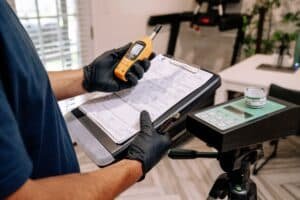
Here is how a Mold Testing Houston inspection works:
- A TDLR-licensed assessor walks the home and checks the crawl space, attic, and HVAC system.
- We measure moisture and humidity in the areas that matter.
- We collect air or surface samples and send them to EMSL Analytical, an AIHA-LAP accredited lab.
- You get your lab results and written report in as little as one business day.
Our standard inspection is $550 flat for homes up to 2,500 square feet. You can see what is included on our Houston mold testing page.
Can Crawl Space Mold Spread Into the House?
Yes, air from a crawl space can move up into the living space through gaps in the floor, plumbing openings, and duct leaks. That is why a musty smell in a bedroom can start under the house.
If your AC ducts run through the crawl space, check those too. Leaky or sweating ducts can pull damp air into the system. Our post on how to tell if you have mold in your air ducts explains the signs and how to tell mold from plain dust.
Mold under the floor can also travel up wall cavities where moisture follows. If you see staining low on interior walls, read our guide on checking for mold behind walls.
What Should You Fix First: the Water or the Mold?
Fix the water first, every time. Cleaning or encapsulating a crawl space while water still gets in only buys a few months before the mold comes back.
Follow this order:
- Find the source. Leak, drainage, ground moisture, or condensation.
- Stop it. Repair the plumbing, regrade, add drainage, or fix duct insulation.
- Dry the space. Wet wood and soil need to dry out before anyone seals anything.
- Clean up the growth. Small areas may be manageable; larger areas follow the Texas protocol rules above.
- Protect the soil. The Building America guide calls for a ground cover with seams lapped 6 to 12 inches and sealed, and the sheeting run at least 6 inches up walls and piers.
- Verify the result. After remediation, post-remediation clearance testing confirms the job actually worked.
If your crawl space trouble started after a plumbing failure, our guide to mold after a slab leak covers the same water-first logic for homes on concrete slabs.
Why Should the Person Testing Be Different From the Person Fixing?
Texas law keeps mold assessment and mold remediation separate on the same project, so the company that finds the problem cannot also be the one paid to fix it. That rule protects you from an inspection that conveniently finds a big job.
Mold Testing Houston has been assessment only since 2017. We never do remediation, so our report has one job: tell you what is actually in your crawl space and what it takes to fix it. Our remediation protocols start at $750 when a written plan is needed.
Need Your Crawl Space Checked?
If you smell something musty, found growth under the house, or just bought a pier-and-beam home and want to know what is down there, we can help. Call 832-838-9387 or book your mold inspection online. Same-day appointments are often available, and your results arrive in as little as one business day.
Crawl Space Mold FAQs
What causes mold in a crawl space?
Moisture causes it. The most common sources are damp soil without a ground cover, poor drainage, plumbing leaks, and condensation on ducts or pipes.
How do I know if my crawl space has mold?
Look for spots or fuzzy growth on joists and the subfloor, wet insulation, and standing water, and notice any musty smell in the rooms above.
Should I encapsulate a crawl space that has mold?
Fix the water source, dry the space, and address the existing growth first. Sealing a wet, moldy crawl space traps the problem instead of solving it.
How much does a crawl space mold inspection cost in Houston?
Mold Testing Houston charges $550 flat for a standard inspection of homes up to 2,500 square feet, with lab results in as little as one business day.