Most people lose this race in the first day, and they lose it to logistics rather than to water.
The drying is not usually the hard part. The hard part is that after a serious Houston storm the power is out, the streets are impassable, every rental yard is stripped of dehumidifiers, and the mitigation companies are booked three days deep. A 36-hour job becomes a five-day job, and by the time equipment arrives the question has changed from preventing mold to finding out how much started.
Mold Testing Houston has been an assessment-only company since 2017, operating under TDLR license ACO1245. We do not perform remediation and we do not do water extraction, so nothing below is written to sell you a cleanup.
Why Houston’s Mold Window Is Shorter Than 48 Hours
The EPA’s guidance on mold and moisture is that materials dried within 24 to 48 hours will usually not grow mold. That figure is a national average, and Houston is not average.
Three things compress it here:
- Ambient humidity. Houston averages around 75 percent relative humidity. The recommended indoor range is 30 to 50 percent. You are trying to dry a building using air that is already carrying a heavy moisture load, which is why box fans alone rarely finish the job in this climate.
- Heat. Warm, wet conditions accelerate germination. Storm season and the hottest months are the same months, and a house without power in August climbs past 85 degrees indoors within hours.
- Where the water hides. Wall cavities, subfloor, and attic insulation hold water long after surfaces feel dry. Insulation in particular almost never dries in place, and it sits directly against the framing.
The practical version: treat 36 hours as your working deadline, not 48. If you hit it, you have probably prevented a problem. If you miss it, plan on finding out what started rather than assuming nothing did.
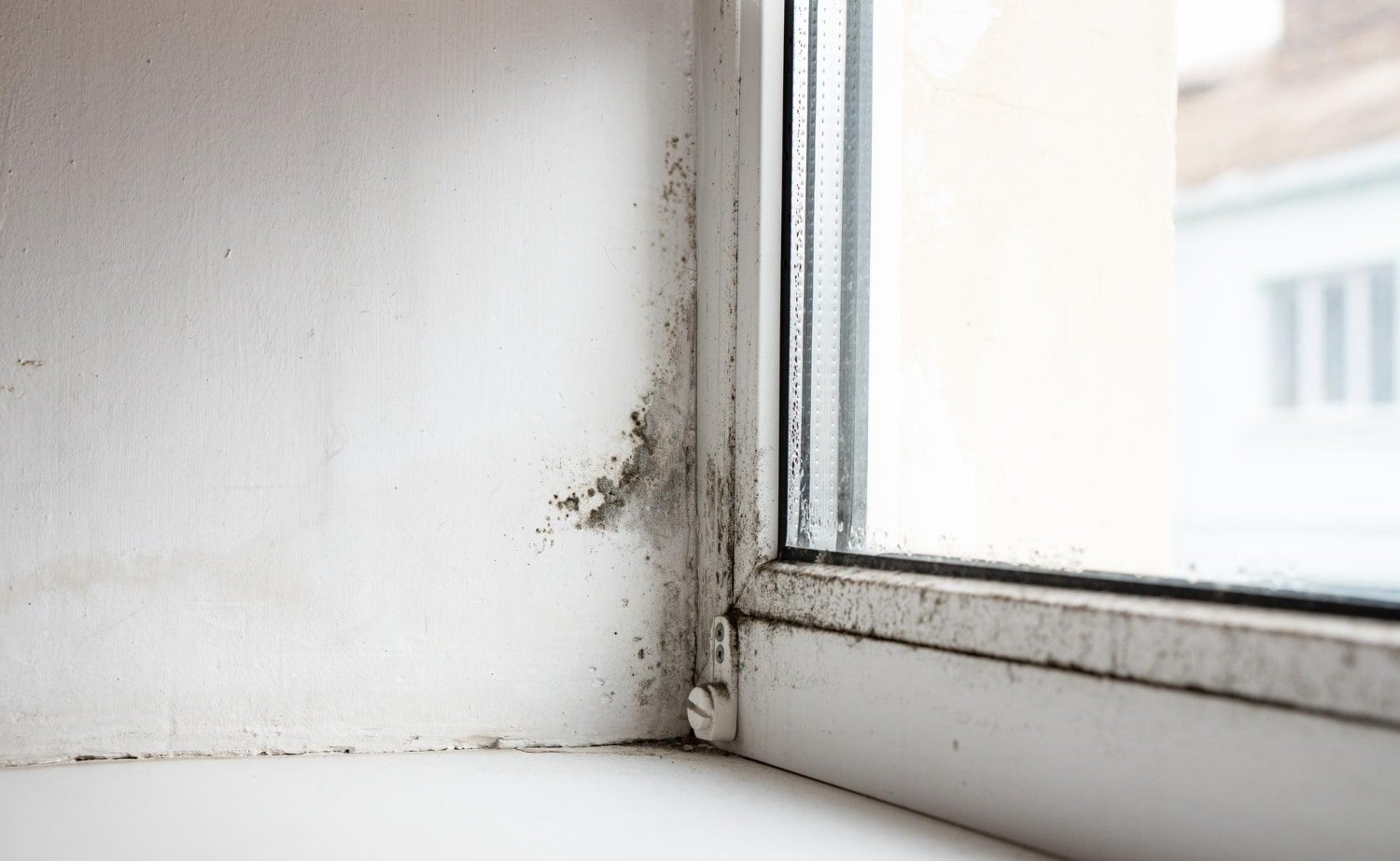
One more thing worth knowing. Visible patches usually take one to three weeks to appear. The absence of anything visible on day four tells you nothing useful, because by the time it shows on the drywall surface there is often an established colony behind it.
The First 48 Hours, In Order
This sequence is about prevention. Testing comes later, and only if prevention did not work.
- Document before you touch anything. Photos and video of standing water, the high-water line on walls, damaged contents, and the point where water entered. Do this before you move a single item. You cannot recreate it later, and where the water came from turns out to matter more than most people expect.
- Get standing water out. Pumps, wet vacuums, mops. Every gallon still in the structure is a gallon evaporating into the air you are trying to dry.
- Pull anything porous that will not dry in time. Carpet padding, soaked insulation, saturated drywall, particleboard. Cut drywall a foot above the water line rather than at it. Materials that cannot be cleaned and dried inside the window should be discarded rather than gambled on.
- Run real drying equipment, continuously. Commercial dehumidifiers and air movers, not household box fans. In 75 percent ambient humidity, fans move wet air around rather than removing water. If you do not own equipment, rent immediately, because supply disappears fast after a widespread storm.
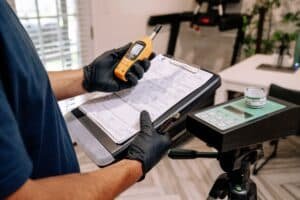
- Measure, do not guess. A hygrometer costs about fifteen dollars. Target below 50 percent indoor relative humidity through the drying period. Surfaces that feel dry to the hand are routinely still wet enough to grow mold.
- Check where nobody looks. Behind baseboards, under cabinet toe kicks, inside closets on exterior walls, and at the bottom of interior wall cavities. Water travels sideways and downward, and these are the spots that seed problems three weeks later.
If the power is out, your realistic goal shifts. Open what you can, remove what is soaked, and accept that you are slowing the clock rather than stopping it.
Will Mold Stop Growing in the Wall If It Dries?
This is the question that matters on day four, and the honest answer has two parts.
Growth stops when the moisture stops. Mold needs water. Remove it and active growth ceases. In that narrow sense, yes, drying it out works.
What is already there does not disappear. Dormant growth stays on the material, and the spores it produced stay in the dust and the air. Re-wet that wall and it restarts from where it left off rather than from zero. Dried mold on porous material is still contaminated material, which is why remediation removes drywall and insulation instead of simply drying them.
So the useful question is not whether the wall is dry. It is whether anything got established before it dried, and how far it reached. A moisture meter answers the first half. Nothing you can see answers the second.
How to Tell Whether the Drying Actually Worked
Four signals, in the order they become available.
- Moisture readings, taken through the structure rather than at the surface. Framing, subfloor, and the base of wall cavities. A meter reading dry at the drywall face says very little about what is behind it.
- Smell, roughly a week out. A musty odor that arrives after the house is dry is the most reliable free indicator you have. It means something is producing spores somewhere you have not looked.
- What happens when the air conditioning runs. If the smell appears with the system and fades when it stops, look at the air handler, the drip pan, and the condensate line. Storm humidity plus a running AC is a common way for HVAC contamination to start.
- Air sampling with an outdoor control. The only one that produces a number. Indoor spore counts compared against outdoor air at the same property on the same day, which is the comparison that makes any spore count meaningful.
Timing matters on that last one. Wait until the structure is genuinely dry, usually five to seven days after the water event, before sampling. Testing mid-dry produces numbers that move as the moisture moves, and you will pay for a result you cannot rely on.
If a contractor already removed material and dried the space, what you want is clearance testing rather than a general inspection. Same equipment, different purpose: it verifies the work against a defined standard instead of telling you whether a problem exists.
Documenting Where the Water Came From
Worth a short section, with a clear boundary around it.
How water entered your home determines a great deal about what happens next, including which policy is even in play. Rising water, wind-driven rain through an opening the storm created, and a pipe that failed during a freeze are three different events that can leave identical-looking damage in the same room.
A mold assessment documents the physical evidence: where moisture is present, how far it traveled, what species are growing, and what the moisture pattern indicates about the source. That is a building measurement, and it is the kind of record that holds up when someone questions it months later.
What we do not do is read policies, interpret coverage, or advise on claims. That is what your carrier, a public adjuster, or an attorney is for. We produce the evidence. Someone else argues about it.
The one thing worth doing today regardless: photograph everything before you move it, and keep the drying equipment receipts.
When Testing Is Worth Paying For
Not always, and after a small event usually not. If water exposure was limited, nothing porous got soaked, you dried it fast, and there is no odor, you probably do not need an inspection.
Testing earns its cost after a storm in four situations: the structure did not get dry inside the window, water reached materials you cannot see behind, a musty smell appeared after everything was supposedly dry, or you need documentation that someone else will act on.
Our full breakdown of that decision, storm or no storm, is in do you need a mold test.
One thing to be careful of in the weeks after a major storm. Out-of-town restoration crews arrive in volume, and free inspections multiply. A free assessment from a company bidding on your cleanup is a sales visit, and in Texas the same company is not permitted to perform both the assessment and the remediation on one project anyway. If the affected area exceeds 25 contiguous square feet, the law requires a written remediation protocol from a licensed assessor before licensed remediation begins.
Frequently Asked Questions
How long does it take for mold to set in after a flood?
Mold can begin growing within 24 to 48 hours of water intrusion, and in Houston the practical window is closer to 36 because of heat and humidity. Visible growth typically takes one to three weeks to appear, so the absence of anything visible in the first few days does not mean nothing started.
Will mold stop growing in the wall if it dries?
Active growth stops when the moisture is gone, but the growth that already occurred does not disappear. It goes dormant on the material and restarts if the wall gets wet again. Dried mold on porous material like drywall or insulation is still contaminated material, which is why remediation removes those materials rather than just drying them.
How long does it take for mold to spread inside walls?
Once established, growth spreads across a wall cavity over days to weeks, following the moisture rather than spreading evenly. How fast depends on how wet the material stayed, what the material is, and the temperature. Paper-faced drywall and fiberglass insulation batts hold moisture longer than framing lumber, so a cavity can stay hospitable long after the studs read dry.
What kills mold after a flood?
Removing the water is what stops it. Bleach and antimicrobial sprays kill surface growth on hard, non-porous materials, but they do not penetrate drywall, insulation, or unfinished wood, and they do nothing about moisture inside the material. Porous materials that stayed wet get removed rather than treated. Any product marketed as killing mold without addressing the water is treating a symptom.
How soon after a storm should I test for mold?
Wait until the structure is dry, usually five to seven days after the water event. Sampling while drying is still underway produces numbers that shift as moisture levels shift. Once moisture readings come back normal and indoor humidity is stable, an air sample with an outdoor control gives you an accurate picture.
How much does mold testing cost in Houston after a storm?
A flat $550 with us, the same as any other inspection. That covers the visual assessment, moisture mapping and thermal imaging, air and surface sampling with an outdoor control, lab analysis through EMSL Analytical, an AIHA-LAP accredited laboratory, and a written report in one business day. A remediation protocol, if the lab confirms you need one, starts at $750.
Do I need to test if my home did not flood inside?
Probably not. If no water entered, the roof held, and indoor humidity stayed under control, there is nothing to find. Test if you have a specific reason to suspect intrusion: a musty smell, staining, humidity that never came back down, or wind damage to the roof that could have let water into the attic without leaving any sign downstairs.
Find Out If You Won the Race
If your home took water in a Houston storm and you are not sure whether the drying finished in time, an independent assessment answers it with a measurement instead of a guess.
Mold Testing Houston operates under TDLR license ACO1245 and has been assessment-only since 2017. We do not perform remediation, we do not do water extraction, and we do not bid on cleanup, so nothing we find creates work for us. A flat $550 mold inspection in Houston includes moisture mapping through the structure, air and surface sampling against an outdoor control, EMSL lab analysis, and a written report in one business day. A Friday inspection means Monday results. Memorial and the Memorial Villages are a specific case, since 2017 water still turns up in disclosures there. See mold testing in Memorial.
Book online, call 832-838-9387, or contact us and describe what happened.