
Mold Inspection vs. Mold Testing: What’s the Difference?
The difference between mold inspection and mold testing comes down to looking versus measuring. An inspection finds visible mold and moisture issues, while testing uses lab analysis to confirm the species and concentration. Understanding the distinction helps you ask the right questions and avoid paying for half a service. At Mold Testing Houston, we have provided both as a single combined service since 2017, under TDLR Mold Assessment Company license ACO1245.
This guide explains what each one does, when you need testing versus a visual inspection alone, and why the strongest services combine the two. If you want both in one visit, our mold testing services deliver lab results in 24 hours.
What Is a Mold Inspection?
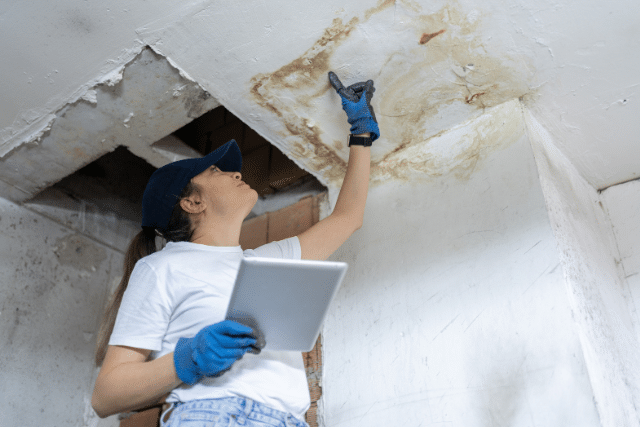
A mold inspection is a visual and physical assessment of a property to locate mold and identify the moisture conditions feeding it. It is the detective work that finds the problem and its source.
During an inspection, the inspector examines walls, ceilings, floors, attics, HVAC systems, and the hidden spots under cabinets. They use calibrated moisture meters and thermal imaging to find elevated moisture behind surfaces, since moisture is what allows mold to grow. The inspection answers two questions: is there visible mold, and what is the moisture problem driving it.
What Is Mold Testing?
Mold testing is the collection of air or surface samples that get analyzed by a laboratory to confirm the type of mold present and its concentration. It is the measurement step that turns observations into documented data.
Testing uses two main methods. Air sampling measures airborne spore counts inside the home and compares them to an outdoor baseline taken the same day. Surface sampling swabs a suspected spot to confirm the species growing there. The lab results give you objective numbers, which matter for insurance claims, real estate transactions, and confirming whether a remediation worked. For a closer look at the sampling itself, here is how mold testing works step by step.
Do You Need Mold Testing or Just an Inspection?
You need mold testing when you have no visible mold but suspect a problem, when health symptoms are involved, or when you need documentation for a transaction or insurance claim. A visual inspection alone may be enough when mold is already plainly visible and you simply need to know the moisture source.
The U.S. Environmental Protection Agency points out that when visible mold growth is already present, sampling is often unnecessary to confirm you have a problem, though it can still be useful to identify the species or verify a cleanup. In practice, most Houston situations benefit from both: the inspection finds the hidden moisture and the testing confirms what is in the air. Our breakdown of mold inspection cost explains how the combined service is priced.
Why Do the Strongest Services Combine Both?
The strongest mold services combine inspection and testing because each one catches what the other misses. An inspection can find moisture and visible growth but cannot tell you the species or airborne levels. Testing can confirm species and levels but cannot find the leak behind the wall.
Put together, they give you the full picture: where the mold is, what is feeding it, what type it is, and how much is in the air. That complete view is what lets you make a smart decision about whether remediation is needed and how to scope it. At Mold Testing Houston, both come standard in the flat $550 inspection, performed by an inspector holding a Mold Assessment Consultant credential.
Should the Same Company Test and Remediate?
No, the same company should not both test and remediate, because it creates a conflict of interest, and in Texas it is not allowed on the same project. A company that profits from removal has a reason to find more mold than may exist.
This is why an independent testing-only company gives you a more trustworthy result. We have no remediation services to sell, so our inspection and lab report reflect only what is actually there. If the results show remediation is needed, you take our documented report to a separate licensed contractor, and after they finish, an independent company verifies the work with clearance testing.
Get a Complete Mold Inspection and Test in Houston
If you want both an inspection and lab testing in a single visit, Mold Testing Houston is ready to help. We are an independent, TDLR-licensed company with same-day scheduling availability and lab results in 24 hours. You can contact our team with questions, call us at 832-838-9387, or book your appointment online.