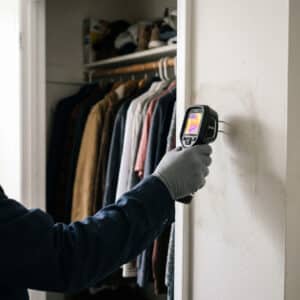
If you searched how to get mold off a bathroom ceiling, the surface-cleaning steps are the easy part. The harder question is whether the mold you’re looking at is the actual problem or just the visible end of something happening above the ceiling. In Houston, where year-round humidity and a long hurricane season give roof and attic moisture multiple paths into the bathroom, the ceiling is the symptom more often than it’s the source.
Mold Testing Houston has been the city’s independent mold assessment company since 2017. We carry TDLR license ACO1245, and Texas law prohibits us from also performing remediation, which means the report we write is honest about what’s actually happening rather than written to sell you a cleanup. This guide walks through what works on the ceiling itself, what most online guides get wrong (especially about bleach), and when the ceiling is telling you to look higher.
Why Does Mold Grow on Bathroom Ceilings?

Mold grows on bathroom ceilings because steam from showers rises, hits the cooler ceiling surface, and condenses into a thin layer of water that sits there long enough for airborne spores to settle and colonize. In a poorly ventilated bathroom where the water doesn’t fully evaporate between showers, the ceiling stays in the moisture range that mold needs around the clock.
Houston’s Gulf Coast climate makes this worse than in most U.S. cities. Outdoor humidity sits above 60% for most of the year, indoor humidity stays elevated even with the AC running, and the city averages roughly nine months of cooling season. That combination means your bathroom ceiling spends more hours in mold-friendly conditions per year than the same ceiling in Phoenix or Denver.
The four moisture sources we see most often when we inspect Houston bathroom ceilings:
- Shower steam with inadequate ventilation. An exhaust fan that’s too small, broken, or vented into the attic instead of outside is the most common cause.
- Roof leaks from hurricane season. Beryl, Imelda, and Harvey damaged thousands of Houston roofs in ways that take months to surface as ceiling staining.
- Second-floor plumbing leaks. A slow leak from a shower drain or supply line above shows up as a stain on the first-floor bathroom ceiling.
- Attic HVAC condensation. When the air handler in your attic isn’t draining properly, condensate drips onto the ceiling drywall below.
How Do You Know If There’s Mold on Your Bathroom Ceiling?
The earliest sign is usually a faint musty smell that intensifies after a shower. Visible mold typically follows weeks later. The most common visual indicators on a Houston bathroom ceiling:
- Black, dark green, or pink-orange spotting, usually starting in the corners or around the vent fan
- Yellowish or brown water staining that doesn’t lift with paint or cleaning
- Paint that’s peeling, bubbling, or flaking in a circular pattern
- Drywall that feels soft or sags slightly when pressed
- A musty odor that returns hours after cleaning
If you see staining that’s spreading outward in a concentric pattern, that’s usually water from above and not surface condensation. That distinction matters because the surface-cleaning steps below won’t fix it, and the post-cleaning satisfaction lasts about three weeks before the mold returns.
How to Get Mold Off a Bathroom Ceiling: 5 Steps
This process works for surface mold on a contained patch smaller than 25 contiguous square feet (roughly a 5-by-5 area) on a painted drywall or plaster ceiling where the moisture source has been identified and fixed. If your situation is larger or the mold keeps returning, skip to the next section.
Step 1: Ventilate and Set Up
Open the bathroom window if you have one. Run the exhaust fan throughout the cleaning process. Place a box fan in a doorway or window, blowing outward so spores leave the home rather than circulating. Turn off the central AC during cleaning so the system doesn’t pull spores through the ductwork and deposit them in other rooms. Lay an old towel or drop cloth on the floor below the work area to catch drips.
Step 2: Put On Protective Gear
Wear nitrile gloves, an N95 respirator (not a cloth or surgical mask), and safety goggles. Cleaning disturbed mold releases far more spores into the air than the mold was releasing while undisturbed, which means the cleaning process exposes you to more risk than the static patch did. The respirator matters. A bandanna or paper mask is not protection.
Step 3: Choose the Right Cleaner (Not Bleach on Drywall)
For painted drywall or plaster ceilings, use undiluted distilled white vinegar or 3% hydrogen peroxide. Either one kills the most common household mold species on contact at the surface level. Spray directly onto the affected area until saturated but not dripping, then let it sit for one hour before scrubbing.
Skip bleach on drywall ceilings. The EPA’s mold cleanup guidance specifically advises against using bleach on porous building materials. The chlorine in bleach evaporates from the surface while the water in the solution soaks into the drywall and feeds the mold underneath. What you see in the days after a bleach treatment is the staining disappearing, not the mold dying. The mold often returns more aggressively because you fed it.
For tile and grout ceilings (less common but found in some Houston homes), a diluted bleach solution does work because tile is non-porous. One cup of bleach per gallon of water, applied to the grout lines, is the standard.
Step 4: Scrub Gently and Wipe
After the vinegar or hydrogen peroxide has sat for one hour, scrub gently with a soft-bristle brush or sponge in circular motions. Don’t scrub aggressively on drywall, you’ll damage the paint and the underlying gypsum board. Wipe the area with clean cotton cloths, then dispose of the cloths immediately in a sealed plastic bag.
For popcorn ceilings, skip the scrubbing entirely. Dab the moldy patch lightly with a vinegar-saturated sponge so you don’t dislodge the texture. Popcorn ceilings installed before 1980 may contain asbestos, and if there’s any chance yours does, test the texture before disturbing it. The cost of an asbestos test is a fraction of the cost of an unprotected asbestos exposure.
Step 5: Dry the Area and Address the Source
Drying is the step most homeowners skip, and it’s the step that determines whether the mold returns. Run the bathroom exhaust fan for at least an hour after cleaning. Place a portable fan blowing directly on the ceiling for the rest of the day. Use a dehumidifier in the room if you have one. Houston’s ambient humidity will fight you on this.
Then ask the question most guides skip: why did the mold grow there in the first place? If you don’t fix the moisture source, the mold returns. The next section is where most of the actual work lives.
When the Ceiling Is the Symptom, Not the Source
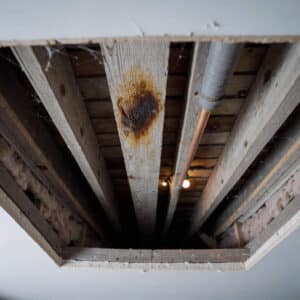
This is the section that separates the bathroom ceiling mold posts that work from the ones that don’t, and it’s the part nobody else in the SERP wants to say clearly: a bathroom ceiling that grows mold repeatedly is almost never a ventilation problem alone. It’s a moisture problem with a source you can’t see from below.
The four upstream sources we identify most often during Houston mold inspections:
- Roof penetrations leaking around vent stacks or skylights. Hurricane damage from Harvey through Beryl loosened thousands of Houston roof penetrations. A vent boot that cracked in 2022 may not have stained the ceiling until 2024, and the slow drip in between gave mold a foothold the whole time.
- Attic HVAC condensate line failures. Most Houston homes have the AC air handler in the attic. When the primary condensate drain clogs, the secondary drain pan catches the overflow. When the secondary pan also clogs or rusts through, condensate drips onto the drywall below.
- Plumbing leaks from a second-floor bathroom. A slow drip from a shower drain or supply line on the floor above shows up as ceiling staining on the floor below, often months after the actual leak started.
- Inadequate attic ventilation. Without proper soffit and ridge venting, hot, humid air pools in the attic and condenses on the underside of the roof decking. That moisture then drips back down onto the ceiling drywall in the bathroom.
In every one of those cases, surface-cleaning the bathroom ceiling does nothing for the actual problem. The mold comes back within weeks or months. The right move is to identify and fix the source before the surface gets touched.
A TDLR-licensed inspection includes moisture mapping with a thermal camera and a pin-type moisture meter. We look at the ceiling, then we look above the ceiling. The protocol we write specifies where the moisture is actually coming from, what needs to be repaired, and what areas need to be remediated by a licensed contractor. Because Mold Testing Houston (ACO1245) is legally prohibited from performing remediation, we have no financial reason to oversell or undersell the scope. The report is the report.
When Does Texas Require a Licensed Inspector?
Texas regulates mold work under the Texas Mold Assessment and Remediation Rules, administered by the Texas Department of Licensing and Regulation (TDLR). The relevant thresholds for a bathroom ceiling mold situation:
- 25 contiguous square feet. Any mold contamination at or above this size legally requires a TDLR-licensed remediation contractor to perform the cleanup, and a separate TDLR-licensed mold assessor to write the protocol and verify the work.
- Insurance claims. Most homeowners’ insurance policies require an independent licensed assessor’s report before paying for mold remediation, regardless of square footage.
- Real estate transactions. If you’re selling or buying a Houston home, the Texas Real Estate Commission disclosure rules require disclosure of known mold conditions. A licensed assessment is how that disclosure gets documented.
- Landlord-tenant disputes. If you’re a renter dealing with bathroom ceiling mold that the landlord is slow to address, Texas Property Code §92.052 covers conditions affecting health. A licensed inspection report is what your case rests on.
The separation between assessor and remediator exists in Texas law specifically to prevent the conflict of interest where the company finding the mold is also the company charging to remove it. When you hire MTH, you get the assessment and the protocol. The remediation is performed by an independent licensed contractor, and we’ll verify their work with post-remediation testing if you want it.
How to Prevent Bathroom Ceiling Mold in Houston
Prevention in a Houston bathroom is harder than in most cities because the ambient humidity gives mold a head start. The five things that actually work:
- Run the exhaust fan during every shower and for 30 minutes after. If the fan barely moves air, replace it. A bath fan rated at 80 CFM or higher is the minimum for a standard Houston bathroom. Confirm it vents outside, not into the attic.
- Squeegee or towel the ceiling after long showers. Sounds excessive. It works. The ceiling never gets wet enough for spores to colonize.
- Keep indoor humidity below 50%. A dehumidifier in the bathroom, or a whole-home dehumidifier on the HVAC system, pays for itself in avoided mold work.
- Check the attic twice a year. Right before hurricane season and right after, look for water staining on roof decking and around HVAC equipment. Hidden leaks caught early don’t become bathroom ceiling problems.
- Use mold-resistant primer and paint when you repaint. Zinsser Perma-White or similar mold-resistant interior paint adds a real layer of protection. Standard bathroom paint doesn’t.
If your home was affected by Harvey, Imelda, Beryl, or any other named storm, schedule an annual mold check even if you don’t see anything. Post-flood mold problems can take 18 to 24 months to surface, well after the visible water damage seemed fully addressed.
Frequently Asked Questions
Does bleach kill mold on a bathroom ceiling?
Bleach removes surface staining on a bathroom ceiling but does not kill mold on porous drywall. The EPA specifically advises against using bleach on porous building materials because the water in the bleach solution feeds the mold living below the surface while the chlorine evaporates. White vinegar or hydrogen peroxide is more effective on drywall ceilings.
What kind of mold grows on bathroom ceilings?
The most common molds on Houston bathroom ceilings are Cladosporium (dark green or black spotting), Aspergillus and Penicillium (white or pale green powdery patches), and in cases of long-term moisture intrusion, Stachybotrys chartarum (black mold). Color alone cannot identify the species. Lab testing is the only way to confirm.
Is bathroom ceiling mold dangerous?
Bathroom ceiling mold releases spores into the air every time you shower, which can trigger respiratory symptoms, allergies, and asthma attacks, especially in children, elderly residents, and immunocompromised people. If anyone in the home has unexplained respiratory issues that improve when away from the bathroom, mold is worth ruling out. Consult a medical professional for symptoms.
Why does mold keep coming back on my bathroom ceiling?
Mold returns to a bathroom ceiling because the moisture source was never fixed. Recurring ceiling mold usually points to inadequate ventilation, a hidden roof or plumbing leak above the ceiling, or condensation from an attic HVAC unit. Cleaning the surface without addressing the moisture source is why the mold comes back within weeks.
When should I call a professional for bathroom ceiling mold?
Call a TDLR-licensed mold assessor when the patch is larger than 25 contiguous square feet, when the mold keeps returning after cleaning, when you see staining spreading from above the ceiling, when peeling paint or sagging drywall is visible, or when anyone in the home has respiratory symptoms. Texas law requires licensed remediation for areas above 25 square feet.
How much does a Houston bathroom mold inspection cost?
A standard mold inspection from Mold Testing Houston is $550 and includes visual inspection, air or surface sampling, lab analysis, and a written report within 24 hours. If a remediation protocol is needed, that’s an additional $750 flat fee that includes the full assessment plus the protocol document.
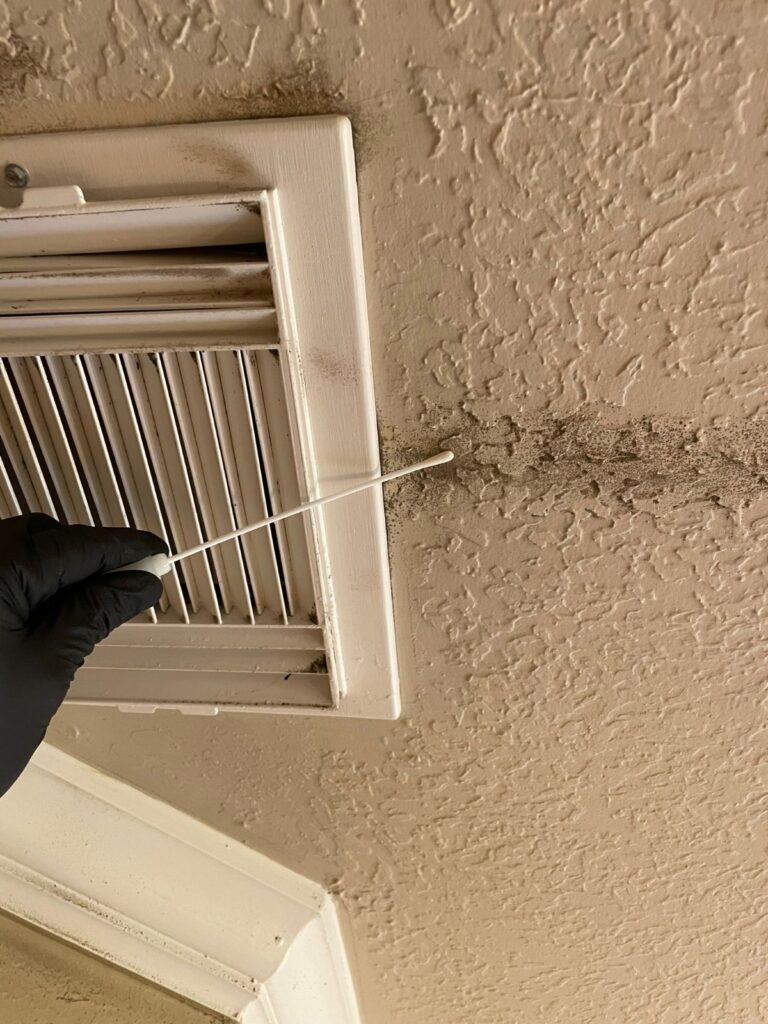
Bathroom Ceiling Mold That Won’t Quit?
If the mold keeps coming back, the source is above the ceiling. Independent inspection from a TDLR-licensed Houston assessor (ACO1245). $550 flat fee. Report in 24 hours. We don’t perform remediation, so the report you get is honest.