If you searched for what kills black mold instantly, you probably already see the problem and want it gone fast. The honest answer is that the “instantly” framing is what’s making the problem worse for most homeowners. Bleach kills the visible stain in minutes, the mold underneath survives, and three weeks later it’s back, sometimes worse. The Houston bathrooms, attics, and walls we inspect are full of mold patches that were “killed instantly” two or three times before someone called us.
Mold Testing Houston has been the city’s independent mold assessment company since 2017. We carry TDLR license ACO1245, and Texas law prohibits us from also performing remediation, which means the report we write is honest about what’s actually happening rather than written to sell you a cleanup. This guide walks through what kills black mold on contact, what only removes the stain, what works on porous versus non-porous surfaces, and where the line legally sits in Texas.
Why “Instantly” Is the Wrong Question
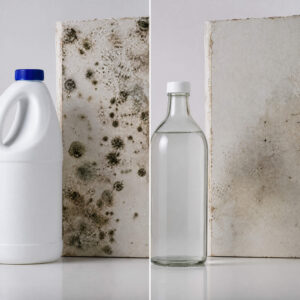
The instant-kill mindset comes from cleaning product marketing and doesn’t match how mold actually works. Mold has three parts: the visible colony (what you see), the hyphae (root structures that grow into the material the mold is feeding on), and the spores (the reproductive cells that survive in the air and on surfaces long after the visible colony is gone).
Killing the visible colony is the easy part. Most cleaning agents do this in minutes. Killing the hyphae inside porous materials is harder and often impossible without removing the material itself. Killing the spores requires sustained moisture control and air filtration for weeks. When a product label says “kills mold on contact,” it’s telling the truth about step one and lying by omission about steps two and three.
That’s why bathroom ceiling mold returns three weeks after a bleach treatment. The chlorine wiped out the surface colony, the water in the solution soaked into the drywall and fed the hyphae underneath, the moisture source (poor ventilation, a roof leak, attic HVAC condensation) was never fixed, and the spores in the air recolonized as soon as the surface was bleached and damp. The owner thinks they killed it instantly. They watered it.
What Actually Kills Mold on Contact
These four agents kill mold cells on contact. On non-porous surfaces (tile, glass, metal, sealed countertops), they reliably finish the job. On porous surfaces (drywall, wood, grout, fabric, carpet padding), they kill what they touch and miss what’s underneath.
- 70% isopropyl alcohol. Kills surface mold cells within seconds on non-porous surfaces. Evaporates fast, has no chemical residue, and doesn’t damage most materials. Best for hard surfaces and small contained patches.
- 3% hydrogen peroxide. Oxidizes mold cells immediately on contact. Effective on a wider range of surfaces than bleach. Apply, wait 10 minutes, scrub gently, and wipe dry. Available at any pharmacy for under $2.
- Distilled white vinegar (undiluted). Acetic acid kills around 82% of common mold species at the surface. Spray, let sit one hour, scrub, wipe dry. The first choice for porous surfaces because vinegar penetrates slightly without the water-feeding problem that bleach has.
- Steam at 212°F. Heat above 140°F kills active mold. Steam cleaners get the surface hot enough to kill the visible colony, but they also introduce moisture, so drying immediately afterward is critical.
Notice what’s not on this list: bleach. The next section is why.
The Bleach Trap
Bleach is the most commonly recommended household mold killer and the most commonly wrong one. The EPA’s mold cleanup guidance specifically advises against using bleach on porous building materials. Here’s the mechanism:
- Bleach is roughly 5% sodium hypochlorite in 95% water.
- You spray it on a moldy drywall surface.
- The chlorine kills the visible mold colony in minutes and bleaches out the staining, which makes the wall look clean.
- The chlorine then evaporates, because it’s volatile.
- The water in the solution stays. Drywall is porous. The water soaks in.
- The mold hyphae living inside the drywall now have what they needed: more moisture.
- Within two to four weeks, the colony regrows from the inside, often more aggressively than before.
You watered your mold problem. This is the single most common failure pattern we see when homeowners describe mold that “keeps coming back.”
Bleach works fine on non-porous surfaces: bathroom tile, grout, ceramic, glass, sealed metal, sealed countertops. On any porous surface (drywall, wood, grout that’s old enough to be cracking, fabric, carpet, ceiling tiles, anywhere mold could have gotten a root system started), use vinegar or hydrogen peroxide instead.
What Works on Each Surface
The right killer depends on the surface, not the color of the mold. Here’s what we recommend during Houston inspections when DIY is actually the right call:
- Bathroom tile and grout (intact): Diluted bleach (1 cup per gallon of water) works because the surface is non-porous.
- Bathroom tile with cracked or old grout: Vinegar or hydrogen peroxide. The grout has become porous, and bleach will feed the mold.
- Painted drywall: Vinegar undiluted. Surface only. If you see visible black mold on drywall, the colony has likely already penetrated the gypsum, and replacement is more reliable than cleaning.
- Bare wood: Vinegar or hydrogen peroxide. Sand lightly after drying to remove any remaining surface staining. Wood deeper than the surface usually means replacement.
- Sealed countertops, glass, metal, ceramic: Any of the four agents listed above. Non-porous surfaces are the easy case.
- Carpet, fabric, upholstery: Vinegar surface treatment can work on a small patch where the padding underneath is dry. If the padding is wet, replacement is the answer.
- Drywall with visible staining spreading outward: Stop. That’s a moisture source above or behind the wall. Cleaning the surface does nothing for the actual problem.
The 25 Square Foot Threshold (Texas Law)
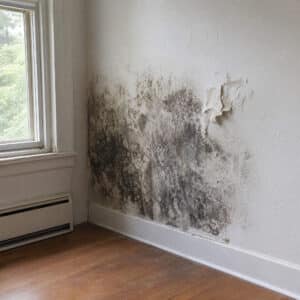
If the affected area covers 25 contiguous square feet or more, Texas law removes the DIY option entirely. The Texas Mold Assessment and Remediation Rules, administered by the Texas Department of Licensing and Regulation (TDLR), require:
- A TDLR-licensed mold assessor to inspect the property, identify the mold species via lab analysis, and write a remediation protocol.
- A separate TDLR-licensed remediation contractor to perform the cleanup according to the protocol.
- The same licensed assessor (or another one) to perform clearance testing after remediation to verify the work.
The assessor and remediator must be from different companies. This is the Texas conflict-of-interest separation rule, and it exists specifically because mold work is high-margin and easy to oversell. When the same company finds the mold and quotes the cleanup, the incentive to inflate the scope is built in. Mold Testing Houston (ACO1245) only does assessments. We never quote cleanup, because we’re legally prohibited from performing it.
The 25 square foot rule also matters for insurance claims, real estate disclosures under TREC requirements, and landlord-tenant disputes under Texas Property Code §92.052. A licensed assessment is the document that those situations rest on.
How Do You Permanently Get Rid of Black Mold?
Permanent removal of black mold requires three things, in this order, every time. Skip any of them, and the mold returns.
- Find and fix the moisture source. Mold needs moisture to grow. A roof leak, a slab leak, an AC condensation problem, a plumbing leak, inadequate ventilation, or chronic humidity above 60% has to be identified and corrected first. Cleaning the surface before the source is fixed is wasted effort.
- Remove the contaminated material or kill the active colony. For non-porous surfaces, the cleaning agents above kill the colony. For porous surfaces with established hyphae, the material itself usually needs to be removed and replaced. Drywall with visible mold, carpet padding that’s been wet, ceiling tiles, and similar materials are generally removed in licensed remediation work.
- Control moisture and air quality afterward. Indoor humidity below 50%, HEPA air filtration, and continued ventilation prevent spore recolonization. Without this step, new mold establishes on the cleaned surface within weeks.
In Houston, step three is harder than in most U.S. cities because of the climate. Indoor humidity drifts above 50% during long stretches of the year, especially during hurricane season, which is why a portable or whole-home dehumidifier is a useful long-term investment after any remediation.
Frequently Asked Questions
What kills black mold instantly?
Nothing kills black mold instantly in the way most people mean. 70% isopropyl alcohol and 3% hydrogen peroxide kill surface mold cells on contact, but they only reach what’s on the surface. The mold roots in porous materials like drywall, wood, and grout survive, and the mold regrows within weeks unless the moisture source is fixed and the affected material is removed.
Does bleach kill black mold?
Bleach kills black mold on non-porous surfaces like tile, glass, and metal, but it does not work on porous materials like drywall, wood, or grout. The EPA specifically advises against using bleach on porous surfaces because the chlorine evaporates while the water in the solution soaks in and feeds the mold underneath. The visible stain disappears, but the mold survives and often returns more aggressively.
What actually kills mold on drywall?
Nothing reliably kills mold inside drywall once it has colonized the gypsum core. The standard approach for mold on drywall covering more than a small surface area is to remove and replace the affected drywall, not to clean it. White vinegar or hydrogen peroxide can kill surface mold on painted drywall before it penetrates, but visible black mold on drywall almost always means the colony has reached the gypsum, and replacement is more reliable than cleaning.
Is black mold the most dangerous kind of mold?
Black mold (Stachybotrys chartarum) gets the most attention, but mold color alone does not indicate toxicity. Aspergillus, Penicillium, and Cladosporium can also produce mycotoxins and trigger serious respiratory symptoms. The only reliable way to identify which species is present is lab analysis of an air or surface sample. If you suspect health symptoms from mold exposure, consult a medical professional.
When does Texas require a licensed mold inspector?
Texas law requires a TDLR-licensed mold assessor and a separate TDLR-licensed remediation contractor when mold contamination covers 25 contiguous square feet or more. A licensed inspection is also typically required for insurance claims, real estate disclosure under TREC rules, and landlord-tenant disputes under Texas Property Code §92.052, regardless of the size of the affected area.
How much does a Houston black mold inspection cost?
A standard mold inspection from Mold Testing Houston is $550 and includes a visual inspection, air or surface sampling, lab analysis, and a written report within 24 hours. If a remediation protocol is needed, that’s an additional $750 flat fee that includes the full assessment plus the protocol document required for licensed remediation.
Black Mold Bigger Than a Spray Bottle?
If the patch is over 25 square feet, keeps coming back, or has reached the drywall, Texas law requires a licensed assessor. Independent inspection from TDLR-licensed Houston team (ACO1245). $550 flat fee. Report in 24 hours. We don’t perform remediation, so the report you get is honest.