

If you opened a closet, garage storage area, or car and found mold on a leather bag, jacket, or seat, the cleaning steps below will get the item looking like itself again. What most online guides won’t tell you is that the leather is usually the messenger. Houston’s Gulf Coast humidity, combined with closets that don’t circulate air, basements that aren’t supposed to exist in this climate but do anyway, and garages that sit at outdoor humidity, gives leather mold a recurring problem most cleaning guides never solve.
Mold Testing Houston has been the city’s independent mold assessment company since 2017. We carry TDLR license ACO1245, and Texas law prohibits us from also performing remediation, which means the report we write is honest about what’s actually happening rather than written to sell you a cleanup. This guide walks through how to clean the leather, what to use on which type of leather, and when recurring leather mold means there’s a bigger problem in the room around it.
Why Does Mold Grow on Leather?
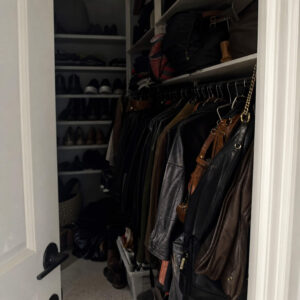
Leather grows mold because leather is organic. It’s animal hide treated with oils and tanning agents that mold spores can metabolize when moisture, warmth, and darkness are present. Indoor humidity above 60% is the threshold where mold spores switch from dormant to active growth. Houston spends most of the year above that threshold outdoors, and indoors during humid stretches if AC and dehumidification aren’t keeping up.
The four storage environments we see most often when Houston homeowners call us about recurring leather mold:
- Walk-in closets without ventilation. Houston closets get little airflow, especially the ones built against exterior walls or under stairs. Leather bags and jackets stored there can sit in 70%+ humidity year-round.
- Garages used as overflow storage. Houston garages aren’t climate-controlled. Leather couches, motorcycle gear, and shoes stored in them sit at outdoor humidity, which means six to nine months a year in mold-friendly conditions.
- Cars left parked with leather seats. Hot summer interiors plus AC condensation that doesn’t fully drain creates mold-friendly conditions on leather upholstery, especially in cars driven daily and never aired out.
- Basements (yes, in Houston). Some older Houston homes have partial basements or below-grade storage rooms. The combination of cooler temperatures, ground moisture, and limited airflow makes them a mold-magnet for any leather stored there.
The cleaning steps below address the leather. The “Why It Keeps Coming Back” section addresses the room.
How to Identify Mold on Leather (vs. Mildew, Dust, or Discoloration)
Mold on leather appears as fuzzy, raised spotting, usually white, gray, green, or black. It often has a slightly powdery texture and a musty smell. The most common indicators on a Houston leather item:
- Fuzzy or velvety patches that you can see standing up from the leather surface
- White or pale-green spotting that spreads outward in an organic pattern
- A musty or earthy smell that intensifies in humid weather or when the item is enclosed
- Discoloration that doesn’t wipe off with a dry cloth (if it does, that’s surface dust or a stain, not mold)
- Multiple leather items in the same storage area showing the same problem at the same time
Mildew is a type of mold and gets cleaned the same way. The “mildew vs. mold” distinction matters less than identifying whether the substance is fungal (handle with the steps below) or simply staining or dust (clean with leather cleaner only).
How to Remove Mold From Leather: Step-by-Step
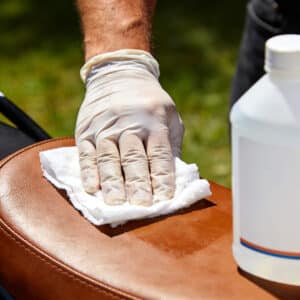
This process works for surface mold on most finished and unfinished leathers. Different leather types need different solutions, which the next section breaks down. Start here for the general process.
Step 1: Move the Leather Outside
Take the leather item outdoors before doing anything else. Cleaning indoors releases mold spores into the air of the room, and those spores will land on other organic materials in the space and start the cycle over. Outdoor cleaning lets spores disperse into the open air where they’re harmless at normal concentrations.
If you can’t take the item outside (an installed leather couch or car seat), open windows and run a fan blowing outward to push spores out of the home. Turn off the central AC during cleaning so it doesn’t pull spores through the ductwork into other rooms.
Step 2: Put On Protective Gear
Wear nitrile gloves, an N95 respirator (not a cloth or surgical mask), and safety goggles. Brushing and wiping mold disturbs the colony and releases far more spores than the static mold was releasing on its own. The respirator isn’t optional if you have any mold sensitivity, asthma, or allergies.
Step 3: Dry-Brush the Mold Off First
Use a soft-bristled brush (a horsehair brush or even a clean toothbrush for small areas) to gently brush the loose surface mold off the leather. Do this outside, with the brushed material falling away from the item. Don’t add any liquid yet. Wetting mold before mechanical removal can smear it deeper into the leather grain and make it harder to clean.
For more thorough surface removal, follow the brushing with a HEPA-filter vacuum. A regular vacuum will exhaust spores back into the air. If you don’t have a HEPA vacuum, the brushing step alone is fine.
Step 4: Wipe With a Diluted Alcohol Solution
Mix 70% isopropyl alcohol with water in a 1:1 ratio. Dampen a soft cotton cloth or microfiber cloth with the solution (do not pour or spray directly onto the leather). Wipe the affected area gently in a circular motion, working from the outside of the mold patch inward to avoid spreading spores. Use a fresh section of cloth for each pass.
Alcohol kills surface mold cells on contact, evaporates faster than water, and is the EPA-aligned choice for porous and semi-porous surfaces where bleach would do more harm than good. The EPA’s mold cleanup guidance specifically advises against bleach on porous materials because the water in bleach solution feeds the mold underneath while the chlorine evaporates.
Step 5: Wipe With Clean Water, Then Air Dry
After the alcohol solution has had a minute to work, wipe the area with a separate cloth dampened in clean water to lift any remaining residue. Then dry the surface gently with a clean dry cloth. Let the leather air-dry completely in indirect sunlight for several hours. Direct sunlight and heat sources will warp, crack, and discolor leather. Indirect sunlight or shade with airflow is what you want.
Step 6: Condition the Leather
Once the leather is fully dry (usually 24 hours), apply a quality leather conditioner to restore the natural oils stripped during cleaning. Conditioned leather is also more resistant to future mold because the conditioner creates a slight barrier that mold spores have trouble penetrating. Skip this step and the leather may crack as it dries out.
Different Leathers Need Different Solutions
The 1:1 alcohol-and-water method above is the default. Some leather types need adjustments:
- Finished or coated leather (car seats, most sofas, jacket leathers): Alcohol solution as described above is fine. You can also use a 1:1 white vinegar and water solution as a backup.
- Aniline leather (premium handbags, soft jackets, “natural” looking finishes): Aniline is highly absorbent. Use alcohol solution only, never vinegar. Patch test on an inconspicuous spot first. The leather may darken temporarily during cleaning.
- Suede and nubuck: Skip the liquid entirely. Brush vigorously with a suede brush outside, then use a suede-specific eraser or cleaner. Liquid on suede will leave water spots and matting.
- Vegetable-tanned leather: Saddle soap is the traditional choice. Alcohol solution works but may temporarily lighten the patina that veg-tan develops over time.
- Patent leather: A damp cloth with mild soap is usually enough since the surface is coated. Alcohol can damage the patent finish on cheaper items.
If you don’t know what kind of leather you have and the item is valuable (a high-end handbag, a vintage jacket, a custom-made piece of furniture), call the manufacturer or a leather conservator before cleaning. Improper cleaning can do permanent damage to leathers worth thousands of dollars.
Why Does Mold Keep Coming Back on My Leather?
This is the section nobody else writes, and it’s the section that matters most if you’ve already cleaned the leather once and the mold returned.
Mold returns to leather because the room storing the leather is still wet enough to support it. Cleaning the leather addresses the symptom. The actual problem is one of three things:
- Ambient humidity in the storage area is above 60%. Houston’s climate makes this the default condition unless you’re actively running a dehumidifier in the closet or storage room. A whole-home humidistat or a single-room hygrometer can confirm.
- There’s a hidden moisture source in the room. A slow plumbing leak in the wall behind a closet, a roof leak that traveled to the closet ceiling, an AC condensation line dripping inside a wall cavity, or a slab leak under a closet floor. All four are common Houston issues and all four show up first as recurring mold on stored organic materials (leather, paper, fabric, books) before the homeowner notices any visible water damage.
- Vehicle moisture for car leather. A clogged AC drain that’s dumping condensation into the carpet under the seat, a leaking sunroof or door seal, or a wet floor mat that never fully dries. All of these put leather seats and dashboards in chronic humid conditions.
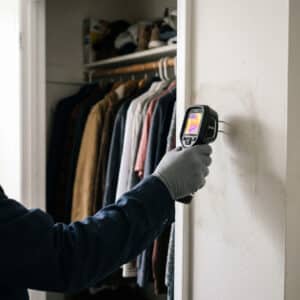
If you’ve cleaned the leather and the mold came back within weeks, the room or vehicle is the problem. A TDLR-licensed mold inspection uses thermal cameras and moisture meters to locate hidden moisture sources without opening walls. The protocol we write identifies the source so the fix targets the cause instead of the leather.
When Should You Call a Houston Mold Inspector?
Call a TDLR-licensed mold assessor for leather mold when any of these apply:
- The mold returns after a thorough cleaning
- Multiple leather items in the same closet or room have mold at the same time
- You see other moisture indicators in the storage area (musty smell, water stains, peeling paint, soft drywall)
- Anyone in the home is experiencing unexplained respiratory symptoms
- The visible mold on walls or other surfaces in the same room covers 25 contiguous square feet or more (Texas law requires licensed remediation above that threshold)
- You’re dealing with this in a rental property and need documentation for landlord-tenant action under Texas Property Code §92.052
A Mold Testing Houston inspection is $550 flat. It includes a full visual inspection of the storage area, moisture mapping with a thermal camera and pin-type meter, air or surface sampling depending on the situation, lab analysis, and a written report within 24 hours. Because MTH (ACO1245) doesn’t perform remediation, the report is honest about scope and there’s no upsell.
Frequently Asked Questions
What kills mold on leather?
70% isopropyl alcohol mixed 1:1 with water is the standard for killing mold on leather. It kills mold cells on contact, evaporates fast, and doesn’t damage most leather types when applied gently. White vinegar diluted 1:1 with water is the secondary option for finished leather but should be avoided on aniline, suede, and unfinished leather because vinegar is acidic and can strip natural oils.
Does vinegar damage leather?
Undiluted vinegar can damage leather by stripping natural oils and altering its pH. Diluted 1:1 with water and applied with a soft cloth (not sprayed directly), vinegar is safe for finished leather like car seats and most furniture. For aniline, suede, nubuck, and unfinished leather, use rubbing alcohol instead because those leathers are more porous and absorb vinegar’s acidity.
Can moldy leather be saved?
Surface mold on leather is usually salvageable if caught early. The leather can be cleaned, dried, conditioned, and returned to use. Mold that has penetrated the interior stuffing of a leather couch, the lining of a leather jacket, or saturated the backing of leather furniture is harder to save. If the mold returns after a thorough cleaning, the moisture source in the storage environment is the actual problem.
Is mold on leather dangerous?
Mold spores from leather can trigger allergic reactions and respiratory symptoms when the item is handled or worn, especially in people with mold sensitivity or asthma. The leather itself isn’t the main risk. The room where the leather grew mold is. Recurring leather mold in a closet or basement usually means elevated humidity or a hidden moisture source affecting everything organic in that space. Consult a medical professional for symptoms.
Why does mold keep coming back on my leather?
Mold returns to leather because the storage environment is still wet enough to support it. Indoor humidity above 60%, a closet with no air circulation, a basement or garage with a hidden moisture source, or a car with a leak are the most common reasons. Cleaning the leather addresses the symptom. Fixing the room or vehicle addresses the cause.
When should I call a Houston mold inspector for leather mold?
Call a TDLR-licensed mold inspector when leather mold keeps returning despite proper cleaning, when multiple leather items in the same closet or room develop mold, when you see other signs of moisture (musty smell, water staining, peeling paint) in the storage area, or when anyone in the home is experiencing unexplained respiratory symptoms. The leather is usually the messenger, not the problem.
Leather Mold Keeps Coming Back?
If you’ve cleaned the leather and it’s already moldy again, the room is the problem. Independent inspection from a TDLR-licensed Houston team (ACO1245) finds hidden moisture sources without tearing into walls. $550 flat fee. Report in 24 hours. We don’t perform remediation, so the report is honest.

